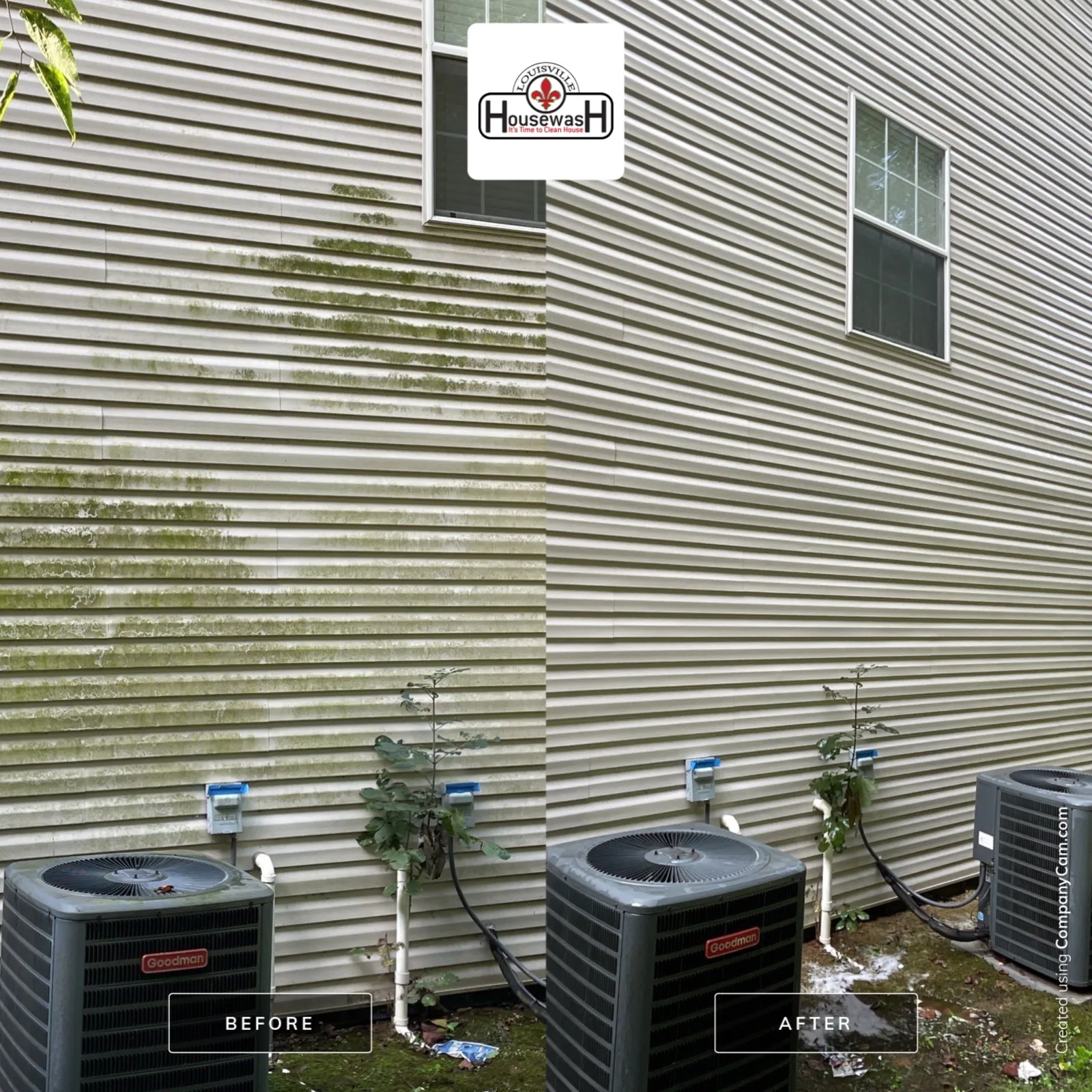
Hiring a pressure washer for the first time is one of those home-services decisions where you don't really know what "normal" looks like until it's happening in your driveway. This is a plain walkthrough of what actually happens when you book a house wash with us — from the first phone call to what your siding looks like two days after the crew drives off — so nothing about the day catches you off guard.
What happens when you call for an estimate
When you call or text (502) 777-8024, we ask a handful of quick questions — approximate square footage, one story or two, siding material, and whether there's anything specific you're seeing (green algae on the north side, black streaks below the gutters, bourbon fungus, etc.). Most Louisville homes we can price accurately with a short phone conversation and a look at the property on the county PVA site or Google Street View. For larger homes, complicated rooflines, or commercial buildings, we'll come out and do a free on-site walkthrough.
Either way, you get a written quote by email or text within 24 hours. The quote is line-itemed — what's included, what's not, and the total price. No pressure to book on the phone, no "today only" discount pushing, no vague ranges that turn into upcharges on the day. If the number works for you, we book a date. If not, no hard feelings.
We don't ask for a deposit for standard residential jobs. Payment is due at completion, by card, check, or Zelle. If we ever have to reschedule for weather (soft washing needs about 4 dry hours after application), we'll call you the day before — not the morning of.
How to prepare your home the day before
You don't need to do much, but a few minutes of prep makes the whole job go faster and cleaner. Here's the checklist we send every customer:
- Close all windows and exterior doors. Even the ones you never open. Soft-wash chemistry has a light chlorine smell during application, and closed windows keep it outside where it belongs.
- Unlock side gates. If your backyard is fenced, unlock the gate the night before or leave a code. Crews arrive with hoses and equipment and can't hop a locked six-foot fence.
- Move vehicles out of the driveway and away from the house. Park on the street or at the far end of the drive. Overspray on a car isn't harmful but nobody wants water spots on a freshly-waxed truck.
- Bring pets inside. Dogs especially. The equipment is loud, the chemistry is safe once diluted but not something you want a curious dog licking off wet grass, and crews moving hoses through a yard can accidentally spook an animal that's normally fine outside.
- Pull outdoor furniture, grills, and potted plants 3–4 feet away from the siding. If you can't move it, tell us and we'll work around it — but a clear work zone means we can move faster.
- Turn the outdoor water on. If you closed off exterior spigots for winter and haven't reopened them, do it the night before. We tap into a standard hose bib for rinse water.
- Take down or secure anything fragile hanging on the exterior — wind chimes, seasonal wreaths, hanging planters near the eaves.
You do not need to be home. Roughly half our customers are at work during the wash. We text before we arrive, text again when we're finished, and send before/after photos if you want them.
What happens on wash day, step by step
Here's the actual sequence, start to finish, on a typical Louisville soft-wash appointment:
1. Arrival and walkaround (10–15 minutes)
The crew pulls up in a marked truck and trailer, introduces themselves at the door if you're home, and does a slow walk around the exterior. We're looking for anything that's changed since the estimate, spots that will need extra dwell time (heavy algae on north-facing siding, bourbon fungus, tannin bleed from oak leaves), fragile plants to flag for extra rinsing, and any surface damage that existed before we started — cracked siding, loose trim, wasp nests in soffits. If we spot something worth knowing about, we tell you before we start, not after.
2. Landscaping saturation and protection (10 minutes)
Before any cleaning solution touches the house, we hose down every bed, bush, tree, and patch of lawn inside the work zone with clean water. Wet plants dilute anything that reaches them and prevent uptake. This step is not optional and it's not something you should have to ask about — if a pressure washing company skips it, walk away.
3. Soft-wash application (20–40 minutes)
Using low-pressure soft-wash equipment (under 100 PSI at the nozzle — less than a garden hose), we apply the cleaning solution from the ground up. The solution is a professional blend of sodium hypochlorite and a surfactant that clings to vertical surfaces. You'll hear the pump running and smell a faint pool-chlorine odor near the work area. That smell dissipates within an hour or two of finishing.
This is the step where the soft-wash method genuinely differs from pressure washing. We're not blasting anything. The chemistry does the work — killing mold, mildew, algae, and bourbon fungus at the root — while the low pressure keeps water from being driven behind your siding, into your soffits, or through failing caulk joints.
4. Dwell time (5–15 minutes)
The solution has to sit on the surfaces long enough to kill the biology it's contacting. On a lightly-soiled house, five minutes is plenty. On a north-facing wall crusted with algae, we may reapply and let it work for longer. During dwell, we're re-rinsing landscaping and prepping for the final rinse. Nothing is idle.
5. Final rinse (20–30 minutes)
We rinse the entire house from top to bottom with clean water at low pressure. This is the visually satisfying part — you watch the streaking dissolve and the actual color of your siding reappear. We work systematically, section by section, and re-treat any spots that need a second pass. Landscaping gets a final flush at the end so no residue lingers on foliage or in mulch.
6. Walk-through and payment (5–10 minutes)
If you're home, we walk the exterior with you and point out anything worth mentioning — a section of caulk that's failing, a soffit that looks soft, a downspout that's disconnected. We're not upselling; we're telling you what a set of trained eyes noticed while they had time to look. If you're not home, we text photos and a written note. Payment is collected on completion. Most residential jobs run 90 minutes to 3 hours depending on square footage and how many stories.
What your house looks like immediately after — and 48 hours later
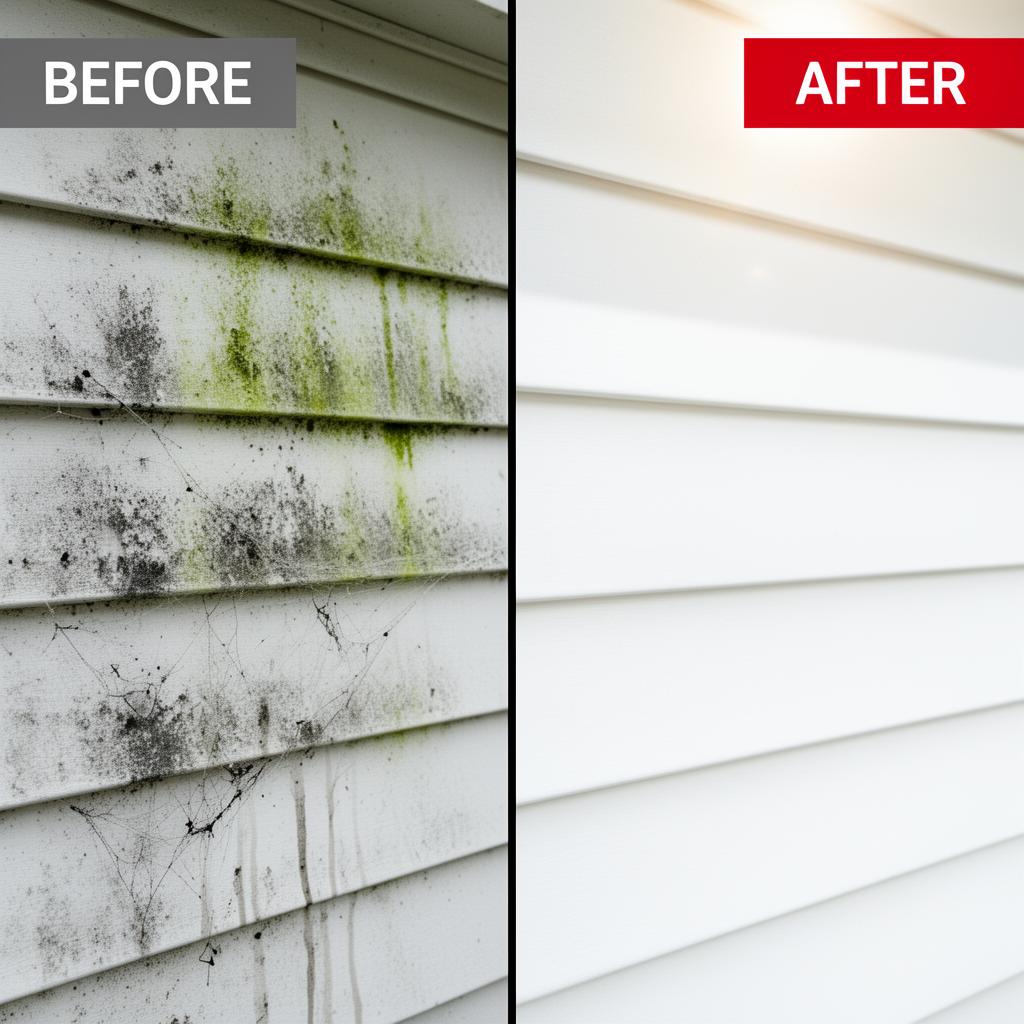
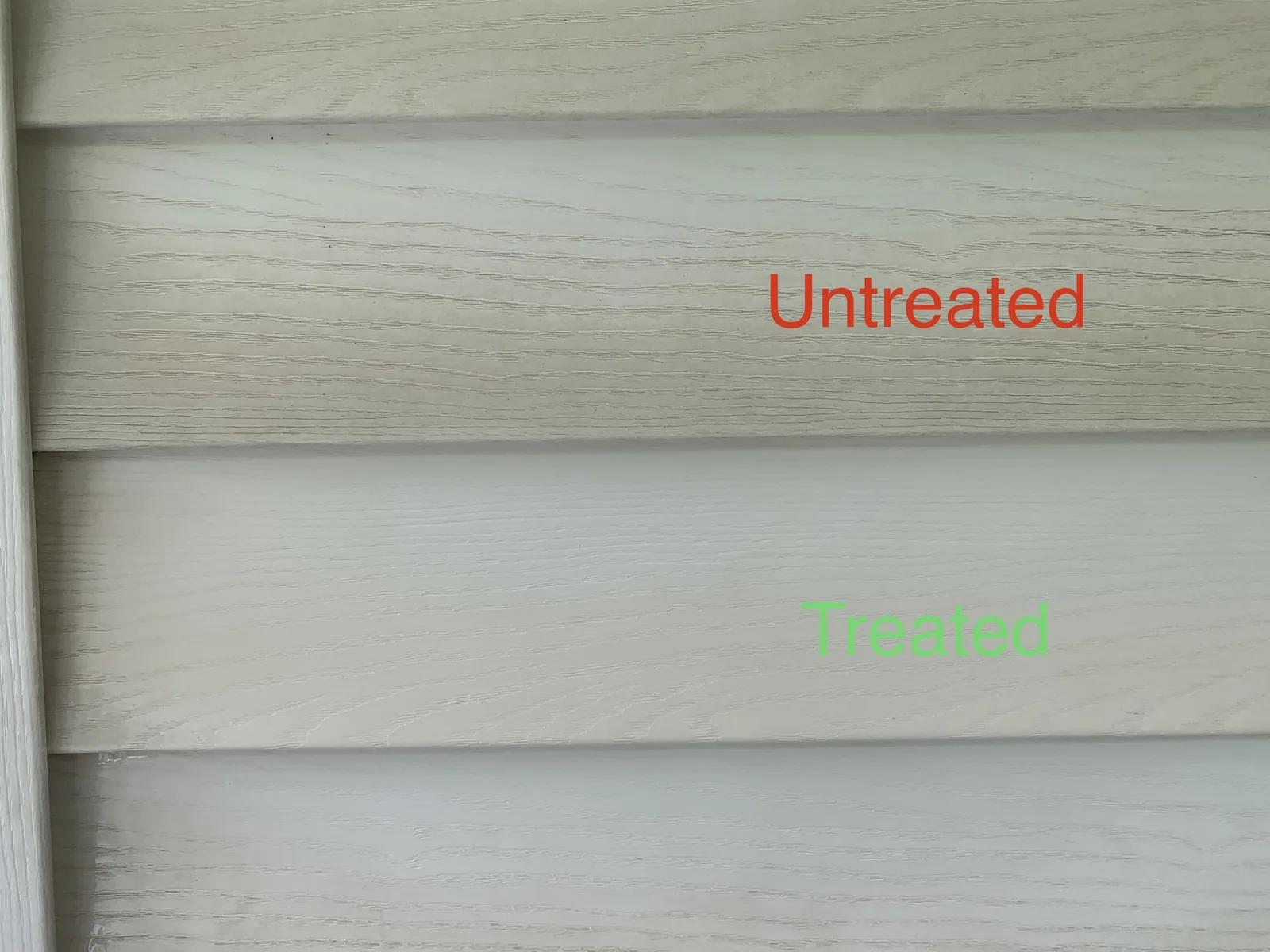
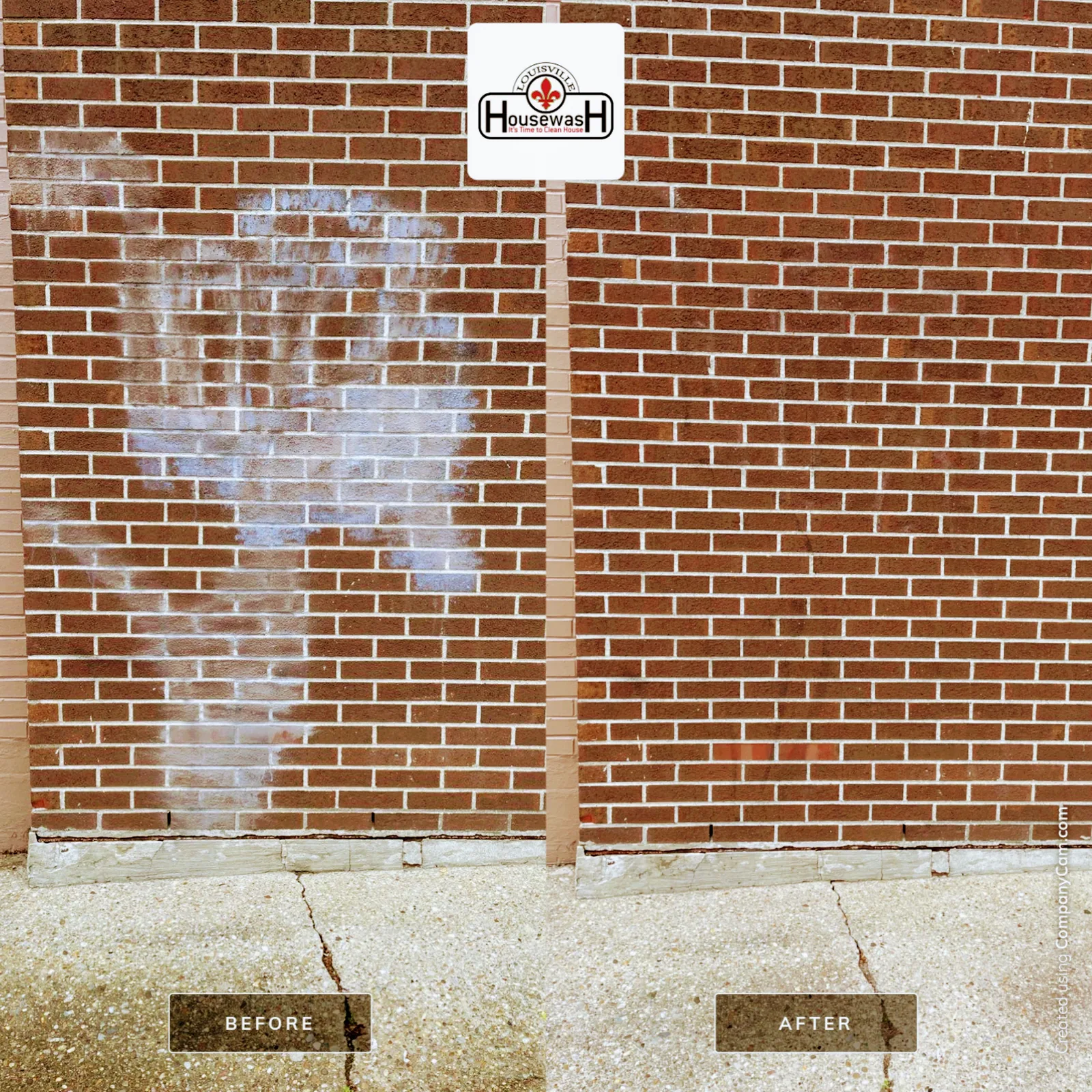
Right after the rinse, everything is wet. Wet siding always looks slightly darker than dry siding, so the dramatic before/after you'll notice most is in the shaded and streaked areas that were obviously dirty going in. You may see faint streaks or drip lines while surfaces dry — this is normal and it clears as the last of the loosened algae washes down with the rinse water and evaporates.
Over the next 24–48 hours, a few things happen. Any remaining algae that the chemistry killed but didn't fully rinse turns brown, then gray, then washes off in the next rain (or the next time you spray it with a garden hose). Sunlight on the treated surfaces continues to bleach off residual staining for another day or two. By day three, what you're looking at is what you've got — and on a properly-executed soft wash of a Louisville home, that's usually a dramatic change.
Some staining takes a second treatment. Tannin bleed from oak and cedar, rust from irrigation water, and old paint oxidation aren't biological and don't respond to standard soft-wash chemistry. We'll flag any of that during the walkaround so you know what to expect.
How long do results last in Louisville's climate?
The honest answer: 12 to 18 months for most homes, sometimes longer, sometimes shorter. Here's what actually drives that number in this region:
- Sun exposure. South- and west-facing walls stay clean longest. North sides — especially under tree cover — regrow algae fastest.
- Humidity. Homes close to the Ohio River, in low-lying pockets, or behind heavy tree lines hold moisture longer and see biology return sooner. A house in a shaded Crescent Hill lot regrows differently than a house on an exposed lot in Prospect.
- Landscaping against the house. Bushes pushed up against siding trap moisture and shade the wall. Even a well-executed wash won't hold as long behind an overgrown boxwood.
- Roof runoff and gutter overflow. If your gutters overflow in heavy rain, the water sheeting down the siding is loaded with organic material from your roof. That's where you see black streaks come back first.
For most Louisville homeowners, an annual or every-other-year soft wash keeps a home in the "looks freshly cleaned" zone continuously. If you're near a bourbon warehouse or under heavy tree canopy, plan on annual. Everyone else can usually stretch it. See our Louisville house washing page for a rough price band by home size.
Red flags when hiring any pressure washer
You don't have to hire us. But if you hire someone else, here are the things worth checking before you write a check:
- No proof of insurance. Ask for a certificate of general liability. A real company will send it to you within an hour by email. If they hedge, hesitate, or send a screenshot of an expired policy, keep shopping. Pressure washing damage claims — broken windows, water in wall cavities, chemical injury to landscaping — are not theoretical.
- They plan to use high pressure on your siding. Vinyl, aluminum, painted wood, stucco, and hardboard all fail under high-PSI water. Manufacturers explicitly recommend low-pressure cleaning. If someone shows up with only a pressure washer and no soft-wash setup, they're doing it wrong regardless of how confident they sound.
- No written quote. "I'll take a look and let you know when I'm done" is how surprise invoices happen. Any real company will put the number in writing before starting work.
- Cash-only, no receipt. Legitimate contractors take multiple forms of payment and provide receipts. Cash-only, in-person only, with no paperwork is a signal to slow down.
- Vague answers about chemistry. A pro can tell you what they're applying to your house and why. If the answer is "just soap and water," that's either untrue or the wash won't kill the biology and the streaks will be back in six weeks.
- Pushing you to sign the same day. The right company can wait a day for you to think about a quote. Sales pressure on a house-washing estimate is a bad sign about how the rest of the interaction will go.
Everything above applies to hiring anyone — not just us. If you'd rather skip the vetting, call or text (502) 777-8024 or use the quote form and we'll take it from there.
— The Louisville Housewash Crew