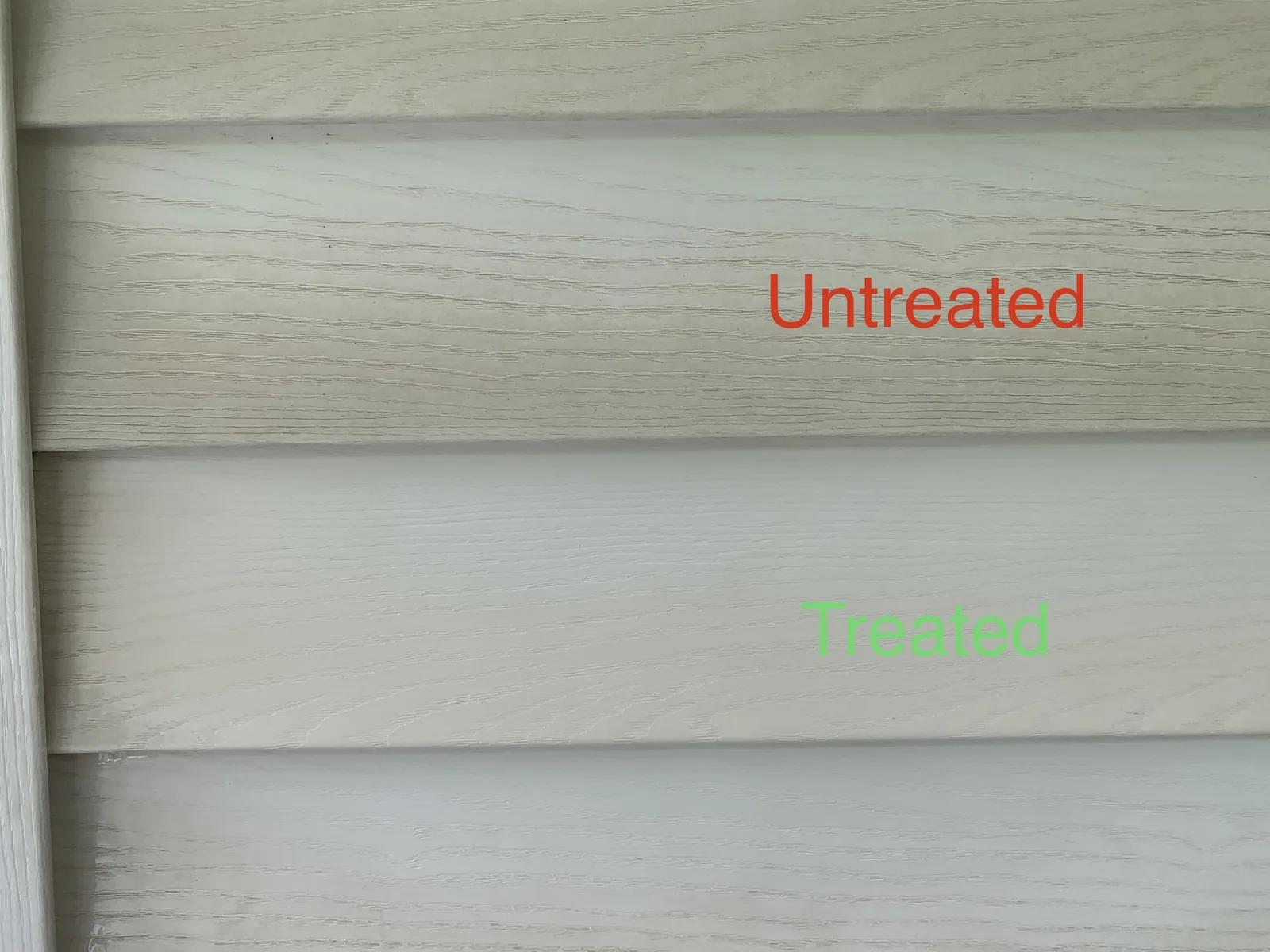
If you've ever watched a pressure washer strip paint off a deck or carve grooves into soft wood, you already know that more pressure isn't always better. Most homes in Louisville need soft washing, not blasting — and knowing the difference can save you thousands in repair costs.
What is pressure washing?
Pressure washing relies on high-PSI water to physically blast dirt, mildew and grime off hard surfaces. It works great on concrete driveways, sidewalks, brick patios and other dense materials that can take the force without damage. Commercial pressure washers typically operate between 2,000 and 4,000 PSI — enough to etch concrete, strip paint and cut soft materials if aimed incorrectly.
For the right surfaces — concrete, hardscape, heavily soiled masonry — pressure washing delivers fast, dramatic results. You can see the transformation in real time as years of buildup wash away. But that same force is what makes pressure washing dangerous on the wrong surfaces.
What is soft washing?
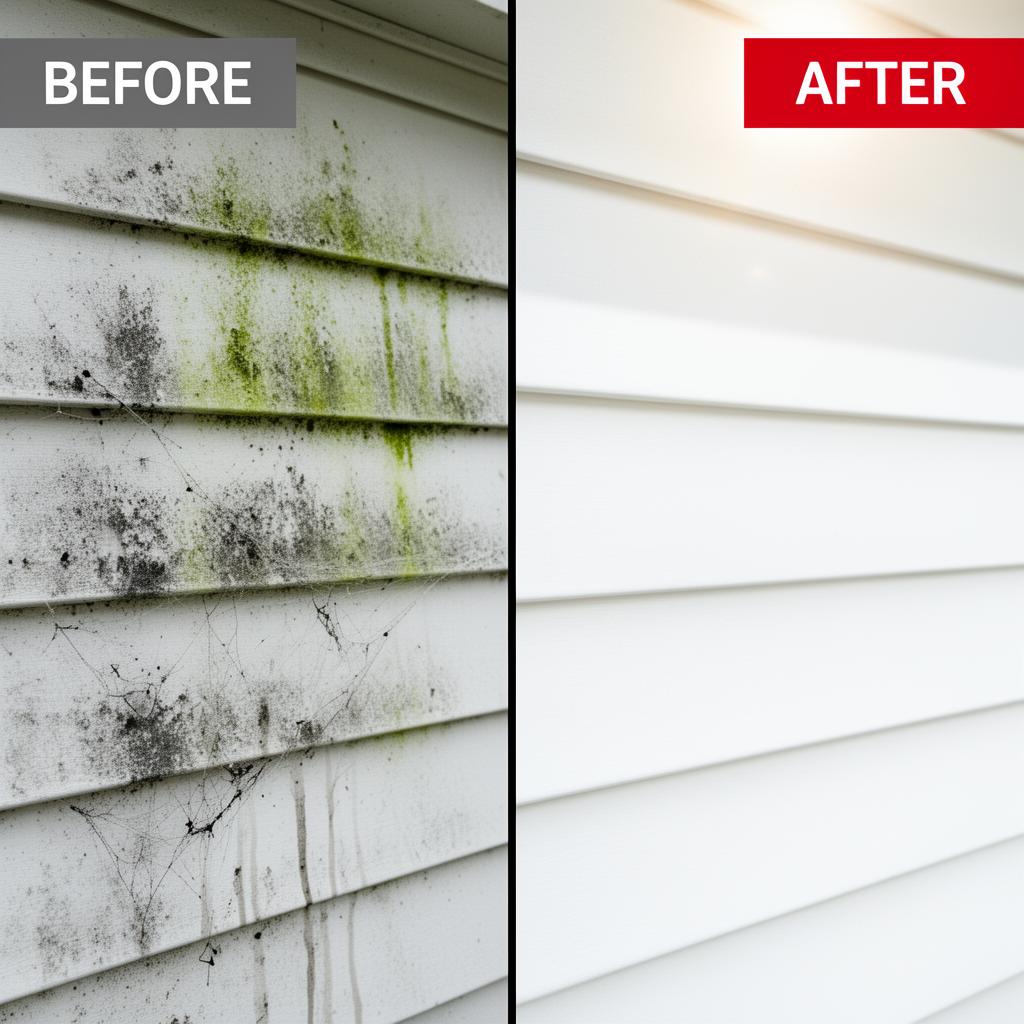
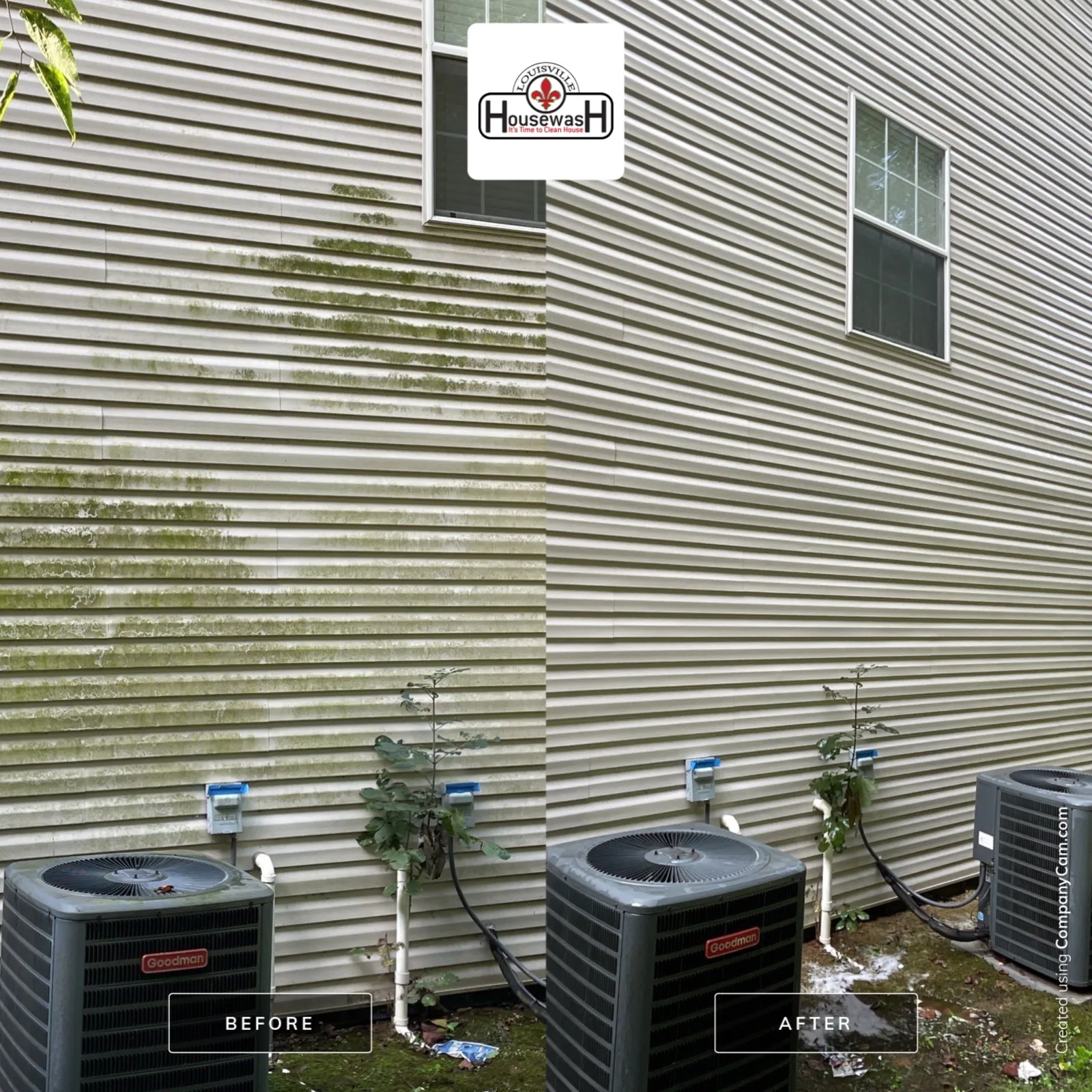
Soft washing uses low pressure — about the same as a garden hose, well under 500 PSI — combined with professional cleaning solutions that break down mold, algae, mildew and bacteria at the source. The detergent does the work, not the pressure. That means it's safe for siding, painted surfaces, stucco, screens and trim — surfaces that would be damaged or compromised by high-pressure water.
The cleaning solutions used in soft washing are professional-grade biodegradable formulations that kill biological growth at the root. This is a critical distinction: pressure washing rinses organisms off the surface temporarily, while soft washing kills them. As a result, soft-washed surfaces stay cleaner significantly longer — typically 12–18 months versus 3–6 months for a pressure-wash rinse.
When to use which method
The surface type is the primary decision factor. Here's a clear breakdown:
- Soft wash: Vinyl siding, brick homes, stucco, wood siding, soffits, gutters, screens, pool cages, and painted exterior surfaces.
- Pressure wash: Concrete driveways, sidewalks, garage floors, brick patios, retaining walls, and other dense hardscape.
- Either (with care): Certain composite materials, pavers, and natural stone — depending on the specific product and condition.
When in doubt, lower pressure with better chemistry is almost always the safer and more effective choice. A good cleaning solution does more work than a high-pressure stream.
The damage high pressure causes on the wrong surfaces
This is where homeowners and inexperienced operators run into trouble. High-pressure washing on surfaces that can't take it causes several categories of damage, often not visible until weeks later:
- Water intrusion: Forcing water behind vinyl siding or up under roof shingles drives moisture into wall cavities and attic spaces, where it causes mold, structural rot and insulation damage — none of which is immediately visible.
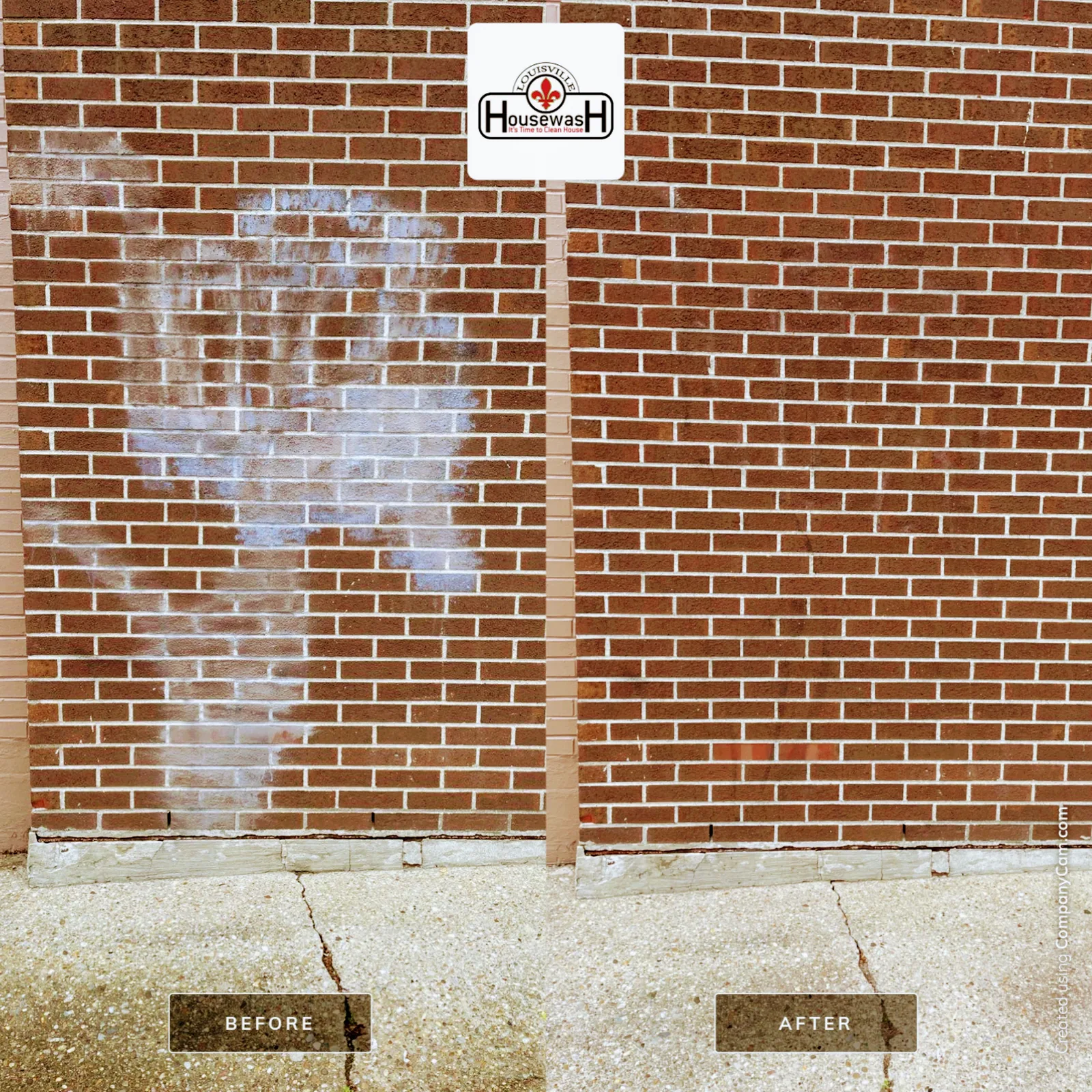
- Surface damage on brick: High pressure erodes mortar joints on older homes, especially homes built before 1970 with softer lime-based mortar. Damaged mortar leads to water infiltration and expensive tuckpointing.
- Wood grain damage: On decks, fences and wood siding, excessive pressure raises and splinters the grain, creating a rough surface that absorbs moisture and stain unevenly.
- Paint stripping: Any painted surface hit with high pressure will have paint peeled, chipped or unevenly stripped — turning a cleaning job into a painting project.
Why this matters specifically in Louisville
Kentucky's humid summers and shaded yards create the perfect conditions for algae, mildew and biological growth. Louisville homeowners often notice green or black streaking on the north and east faces of their homes within a single season — and the temptation is to blast it off with high pressure. That approach works once, but the organisms are still alive in the surface pores and come back faster and heavier the next time.
A soft wash treatment kills those organisms at the root — so the siding stays cleaner, longer, instead of just being temporarily rinsed. For pressure washing in Louisville specifically, soft washing is almost always the right call for any exterior surface except the concrete.
What to ask any pressure washing company
Before hiring anyone to wash your home's exterior, ask two questions: What pressure are you using on my siding? and What cleaning solution are you applying? A company that answers "full pressure" on your vinyl or brick siding, or "just water," is not using best practices. A professional operation uses low pressure plus proper chemistry on the home's exterior and adjusts to higher pressure only for concrete and hardscape.
At Louisville Housewash, we use soft-wash technique on all siding, brick and trim — and surface cleaners at appropriate pressure for driveways and concrete. It's the manufacturer-recommended approach, and it's what delivers results that last.
How soft washing actually works — the chemistry
Understanding the chemistry behind soft washing makes the results less surprising. The primary active ingredient is sodium hypochlorite — diluted bleach, essentially — combined with surfactants that help it cling to vertical surfaces and penetrate into the pores of siding, brick and stucco. When this solution contacts mold, mildew, algae and the organic compounds they produce, it oxidizes and destroys the cell walls of the organisms. They die at the molecular level, not just at the surface.
This is fundamentally different from what a rinse of water does, even at high pressure. Water physically removes organisms from the surface. A surfactant-enhanced biocide solution kills them. The distinction matters for longevity: killed organisms don't regrow from the same colony. They have to start from zero — airborne spores landing on a bare surface and beginning to establish. That's why soft-washed homes stay clean for 12–18 months while pressure-rinsed homes can show visible regrowth within 3–6 months.
After the solution dwells for an appropriate time (usually 5–15 minutes depending on the surface and level of contamination), it's rinsed away at low pressure. The rinse removes dead organic matter, residual detergent, and any loosened dirt. What's left is a genuinely clean surface — not just a visually clean one.
The right nozzles and pressure settings
Anyone who's rented a pressure washer has noticed the color-coded nozzle tips. Understanding them explains a lot about why DIY pressure washing causes so much damage:
- Red (0°): A needle-thin stream, maximum concentration. Never appropriate for any surface on a home. This is the tip that can literally cut skin or strip wood grain in seconds.
- Yellow (15°): Still a narrow, high-impact stream. Appropriate for stripping very heavy buildup from concrete only — not siding or wood.
- Green (25°): Medium fan spray. The most commonly used tip for concrete cleaning. Still too concentrated and powerful for most siding.
- White (40°): Wide fan, lower impact. The minimum appropriate for any contact with siding or painted surfaces, but most professionals still wouldn't use this on vinyl or softer materials.
- Black (65°) or soap nozzle: Very low pressure, wide fan. Used for applying detergent — this is the pressure range appropriate for soft-wash application on most surfaces.
Soft-wash systems operate at pressures around 50–500 PSI using purpose-built low-pressure pumps — far below even the black nozzle on a typical rental machine. Professional soft washing is not "using the soap nozzle on a rental pressure washer." It requires different equipment entirely.
Concrete and hardscape: where pressure washing shines
To be clear about when pressure washing is absolutely the right tool: concrete driveways, sidewalks, brick patios, pool decks, retaining walls and other dense hardscape benefit from high-pressure cleaning. The dense, non-porous nature of these materials means they can take the force, and the physical impact is often what's needed to break up tire marks, embedded grime and calcified organic staining.
Professional concrete cleaning uses a spinning surface cleaner attachment — not an open wand — which delivers consistent, even coverage across the full surface. This eliminates the "tiger stripe" pattern that uneven wand cleaning leaves. For oil and grease stains on concrete, hot-water degreaser combined with pressure produces results that simple water pressure alone can't match.
The key distinction is still surface type. Dense, non-porous concrete is a different material category than the exterior surfaces of most homes. The same amount of force that's appropriate for one is destructive to the other.
Questions to ask any exterior cleaning company in Louisville
Before you hire anyone to clean your home's exterior, here are three questions that will quickly reveal whether they know what they're doing:
- "What PSI will you be using on my siding?" Any answer above 500 PSI for siding is a red flag. A legitimate soft-wash company will describe their low-pressure method and explain why it's appropriate.
- "What cleaning solution are you using, and is it biodegradable?" A professional operation uses a specific formulation with surfactants and biocides, not just water. They should be able to describe their solution and confirm it's safe for landscaping with proper precautions.
- "Are you insured?" Any company doing exterior cleaning should carry general liability coverage. A company without insurance leaves you holding the bill if something goes wrong.
Louisville-specific considerations
Homes in Louisville's established neighborhoods — the Highlands, Crescent Hill, St. Matthews, Prospect, Anchorage — often have architectural features that make the pressure-versus-soft-wash distinction especially important. Older brick homes require gentle treatment to protect mortar integrity. Painted wood siding on Victorian-era homes is particularly vulnerable to high-pressure damage. Homes with ornate trim, deep-set windows, or complex rooflines need low-pressure techniques to avoid forcing water into gaps and junctions.
Louisville's climate also plays a role. Our humid summers and shaded lots (many older Louisville neighborhoods have extensive mature tree canopy) create optimal conditions for algae, mildew and biological growth. The combination of moisture, shade and warmth means growth establishes quickly — and killing it properly with the right chemistry, rather than just rinsing it off, is what keeps homes looking clean between service visits.