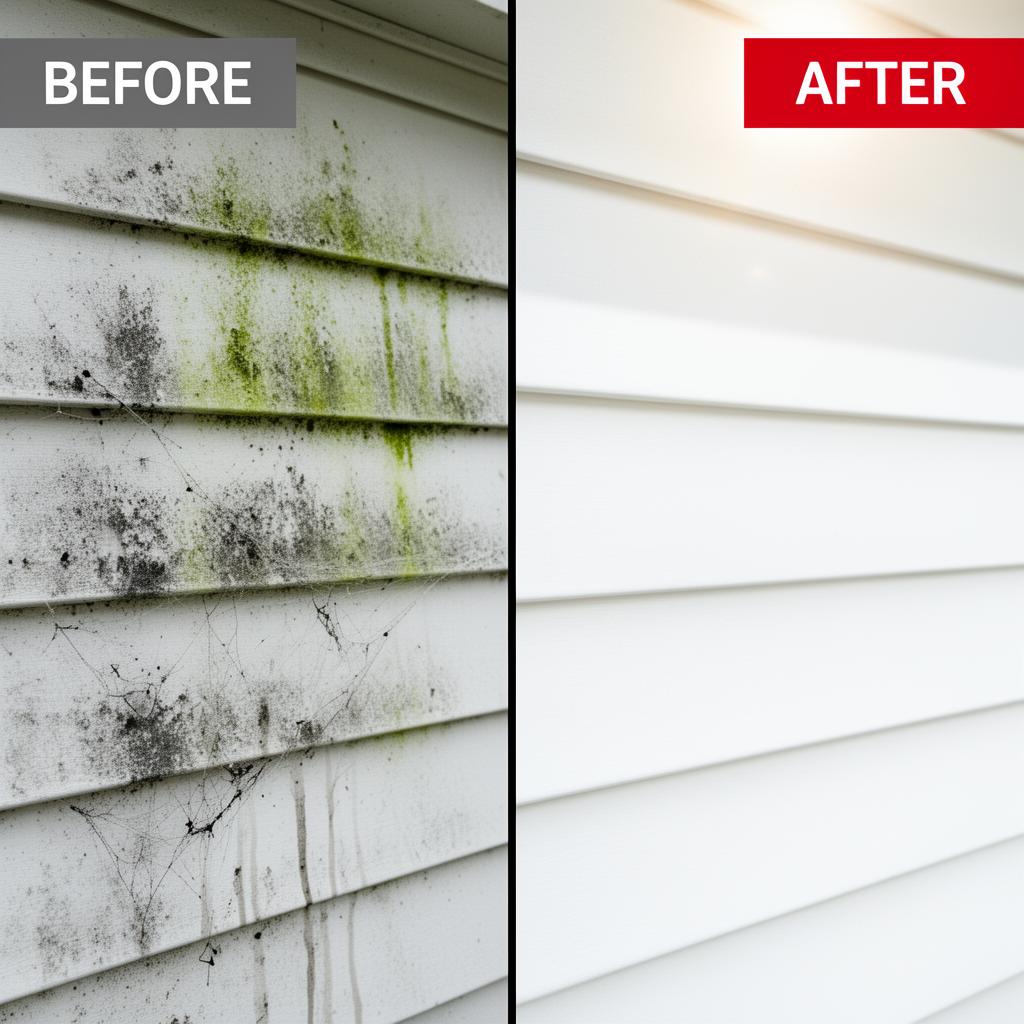
That black, sooty coating on houses, fences and trees near Louisville and Bardstown isn't regular mold or mildew — it's a specific fungus called Baudoinia compniacensis, known locally as bourbon fungus. It feeds on the ethanol vapors released during bourbon aging, and if you live anywhere near a distillery warehouse, you've almost certainly seen it on your property. Here's what it is, why it's so persistent, and how to remove it properly.
What is bourbon fungus?
Baudoinia compniacensis is a black sooty fungus that grows wherever ethanol vapors are present in the air. During bourbon aging, wooden barrels "breathe" — absorbing and releasing liquid as temperatures change throughout the year. The ethanol that evaporates into the atmosphere is romantically called the "angels' share," and it can represent 2–5% of a barrel's volume annually. Near a large aging warehouse holding tens of thousands of barrels, that adds up to enormous quantities of ethanol vapor drifting into the surrounding neighborhood every single day.
Baudoinia feeds on that ethanol. It colonizes any surface it can find — vinyl siding, brick, painted trim, wood fencing, tree bark, grave markers, parked cars and outdoor furniture — and produces dense black deposits that are immediately recognizable once you know what to look for. The fungus was formally identified and named in 2007 by Dr. James Scott, a mycologist at the University of Toronto, though residents of distillery towns had complained about the black residue for decades before it was scientifically understood.
Where in Louisville and Kentucky is it worst?
Anywhere bourbon is actively warehoused. In the Louisville metro, the heaviest concentrations appear near distillery and aging warehouse operations — neighborhoods around Shively and the west end of Jefferson County, where Brown-Forman operates major production and warehousing facilities, see significant Baudoinia activity. Wind patterns carry ethanol vapors well beyond the immediate distillery property, and homeowners a mile or more away still report visible staining depending on prevailing conditions.
Bardstown and Nelson County carry some of the worst bourbon fungus concentrations in the state. As the self-proclaimed Bourbon Capital of the World, Bardstown is surrounded by Heaven Hill, Barton 1792, and other major aging operations with millions of barrels warehoused nearby. Residents there have dealt with Baudoinia for generations, and the issue became national news after lawsuits in which homeowners sought damages for property staining. Our customer Lauren, who recently bought a home in Bardstown, mentioned it directly — she knew what she was getting into but wanted a professional clean to start fresh in her new house.
Eastern Jefferson County and communities near Clermont in Bullitt County — close to Jim Beam's massive warehouse complex — also see elevated bourbon fungus activity.
What does bourbon fungus look like?
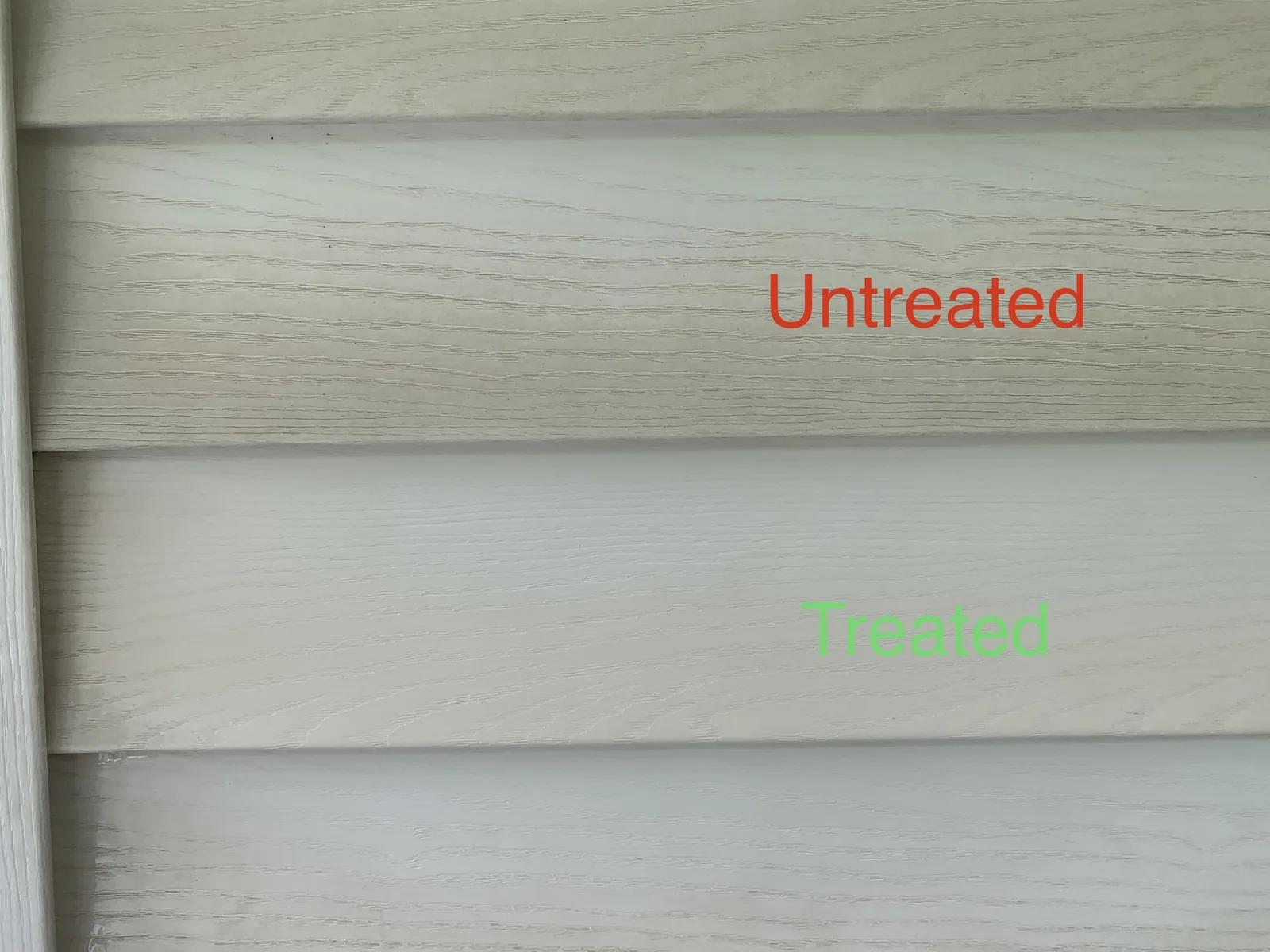
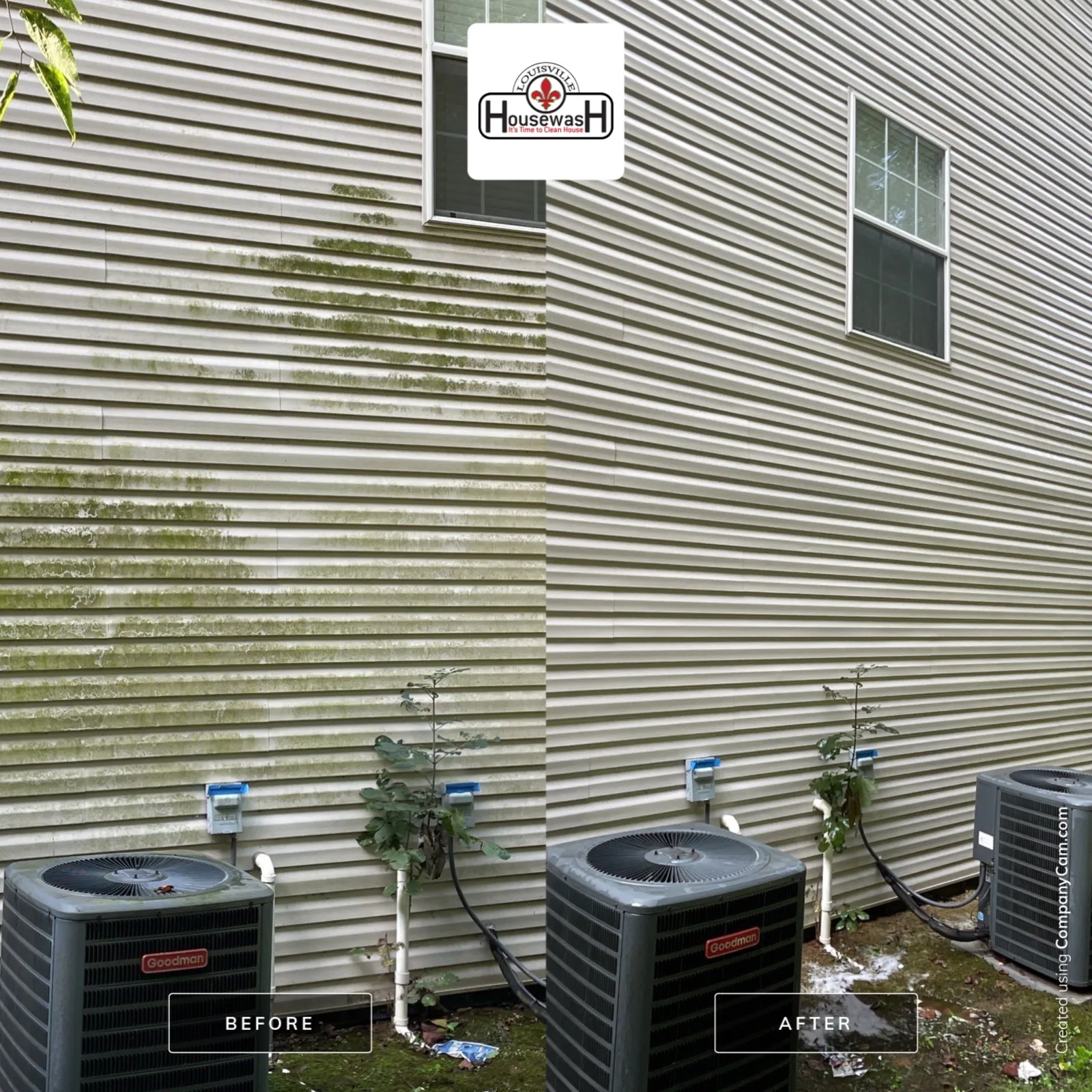
Bourbon fungus staining is distinctive and easy to identify once you know the pattern. Unlike green algae, which grows on shaded surfaces with persistent moisture, or standard black mold streaking, which runs in vertical channels from metal fixtures and gutter overflows, Baudoinia produces a uniform, flat black coating that covers everything in its path indiscriminately. Siding, trim, shutters, fencing, nearby trees and outdoor furniture all show the same dense, sooty color.
It appears most heavily on north-facing and shaded surfaces, where moisture lingers and the fungus establishes more easily. But in areas with heavy ethanol exposure, it colonizes south and west faces too. If your entire exterior is developing a uniform dark tint — not streaks, but an even coating — and you're near a distillery or warehouse complex, bourbon fungus is the most likely explanation.
Is it harmful to your home or your health?
From a structural standpoint, Baudoinia is primarily an aesthetic and property value problem rather than an immediate structural threat. Unlike wood-rot fungi that consume cellulose, bourbon fungus is not actively degrading your siding. However, any biological surface colonization creates conditions for moisture retention, and on wood surfaces left untreated over many years that can contribute to longer-term degradation.
From a health standpoint, bourbon fungus is not considered a significant indoor health hazard. It's an exterior organism that lives on ethanol and surface compounds outside the building, not the kind of indoor black mold associated with respiratory problems. That said, a home coated in black bourbon fungus underperforms in the Louisville real estate market — buyers notice it, inspectors note it, and it raises questions about overall property maintenance. A professional house washing before listing is one of the highest return-on-investment moves a seller can make.
Can you remove it yourself?
DIY attempts are possible but typically produce short-lived results. Most homeowners try consumer-grade bleach in a pump sprayer or a rented pressure washer. The problems with this approach are consistent:
- Concentration: Consumer bleach is diluted for household use. Killing Baudoinia colonies on an exterior surface requires higher sodium hypochlorite concentrations than a retail bottle provides.
- No surfactants: Professional solutions include surfactants that help the cleaning mixture cling to vertical surfaces and penetrate into pores long enough to kill the organism. Without them, a bleach solution runs off before it can dwell.
- Pressure washing regrowth: Blasting the black off with high pressure removes the visible staining temporarily but doesn't kill the organism. It regrows within a season from colonies still alive in the surface pores. High pressure also risks cracking mortar on older brick homes and forcing water behind siding.
- Incomplete coverage: Bourbon fungus colonizes everything it can reach — including high soffits, gable ends, and areas above the roofline. Partial cleaning leaves active colonies that re-seed cleaned surfaces within months.
How professionals remove bourbon fungus
A professional soft wash with properly formulated solutions is the right approach. Here's how the process works:
- Pre-rinse and protect: All landscaping, outdoor furniture and sensitive fixtures are rinsed or covered before treatment. This protects plants from overspray and ensures a clean rinse path.
- Solution application: A sodium hypochlorite-based professional cleaning solution with surfactants is applied at low pressure to the entire exterior — siding, trim, soffits, gutters and any affected fencing. Applied from bottom to top to prevent streaking.
- Dwell time: The solution is allowed to work for several minutes, killing the Baudoinia colonies and breaking down the black pigmentation. On heavily stained surfaces, a second application may be needed.
- Low-pressure rinse: The entire exterior is rinsed top to bottom at low pressure, removing dead fungus matter, residual detergent and surface grime.
- Post-rinse of landscaping: Surrounding plants and ground cover are rinsed again to neutralize any cleaning solution overspray.
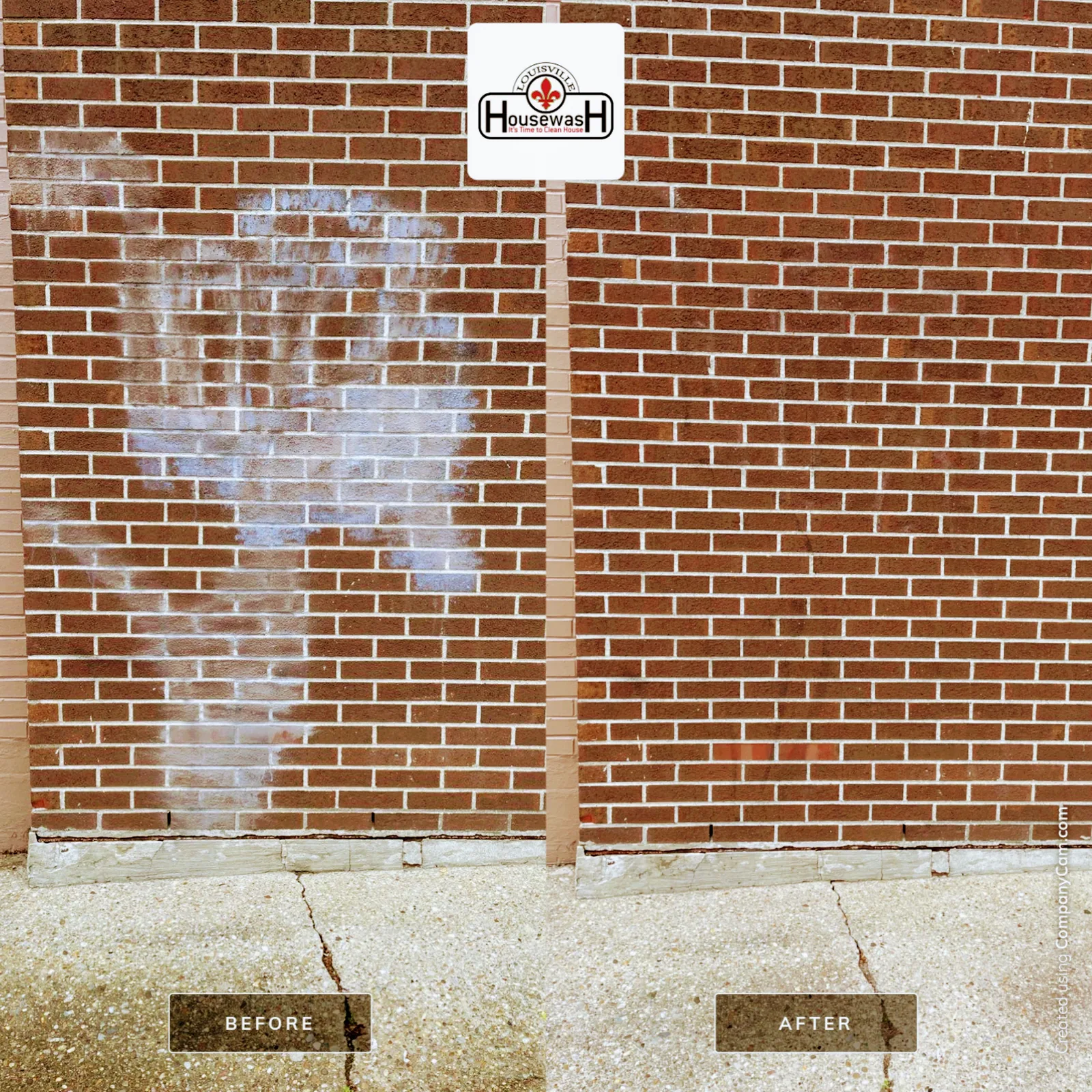
The transformation on a Baudoinia-stained home is immediate and dramatic. Surfaces return to their original color in a single visit. Because the organisms are killed rather than just rinsed, results last 12–18 months in moderate-exposure areas. In neighborhoods with heavy, continuous distillery activity — Bardstown's denser residential areas, for instance — an annual wash cycle is the realistic maintenance cadence.
What Louisville and Bardstown homeowners should expect
If you live near distillery activity, bourbon fungus is a manageable maintenance reality — like gutter cleaning twice a year or driveway sealing every few seasons. A professional soft wash once annually keeps your home looking clean and protects your exterior surfaces from long-term biological buildup.
If you're buying or selling a home in Bardstown, Shively, Clermont or any distillery-adjacent community, factor it in. Sellers who invest in a soft wash before listing consistently present better than comparable properties still showing the black coating. Buyers should schedule a professional clean within the first season of ownership to start fresh and establish a maintenance baseline.
Louisville pressure washing from Louisville Housewash serves Jefferson County, Nelson County, Bullitt County, and the broader Kentuckiana region — including Bardstown, Shepherdsville, and communities throughout the bourbon corridor. Bourbon fungus responds to a soft-wash treatment that kills the growth at the surface rather than blasting it off. Call us at (502) 777-8024 for a free estimate or request a quote online.