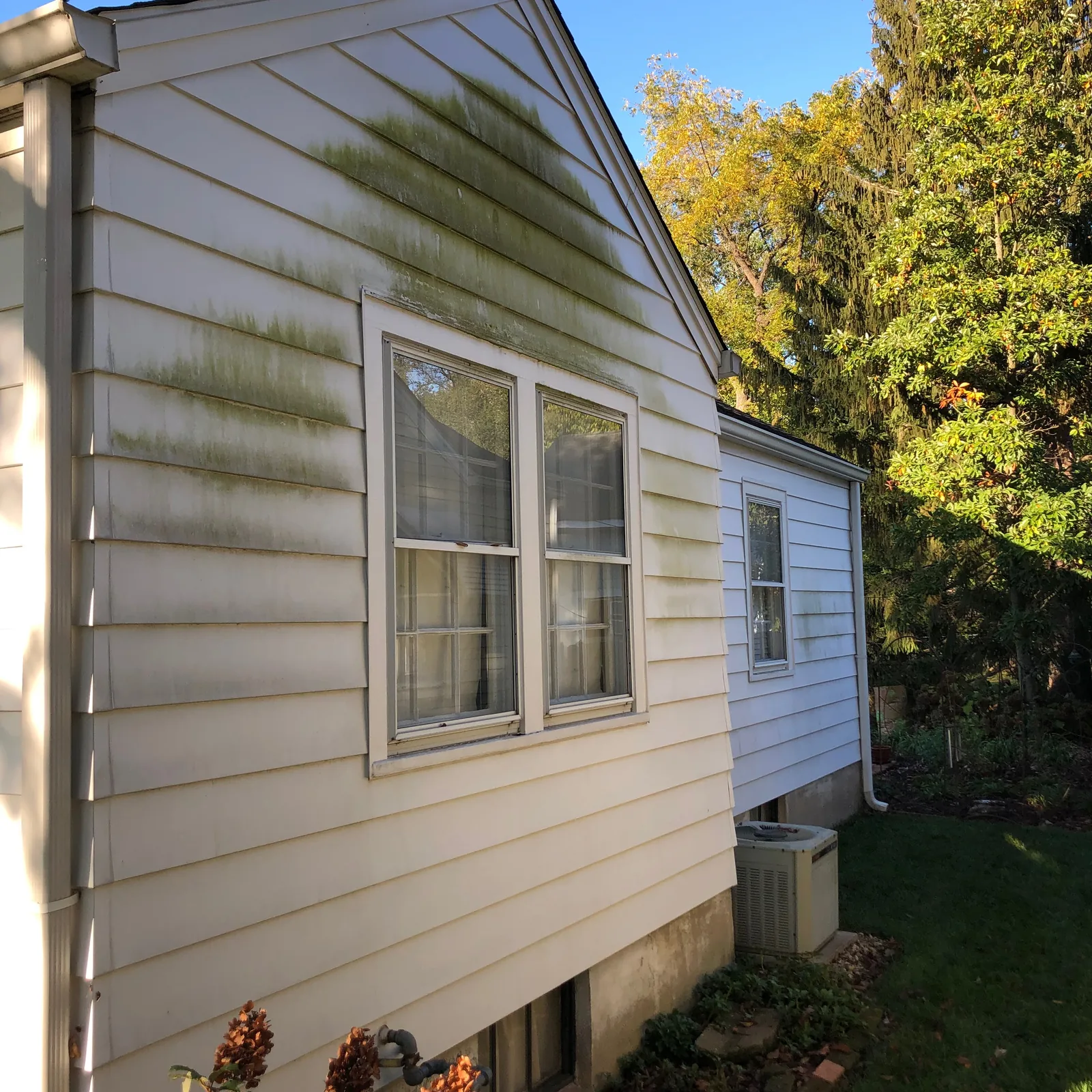
Why Louisville's climate is especially hard on vinyl siding
Louisville's combination of hot, humid summers and significant tree canopy creates ideal conditions for the biological growth — algae, mildew, and the dark Gloeocapsa magma algae behind many black streaks — that discolors vinyl siding. The city's geography doesn't help either: proximity to the Ohio River means elevated ambient humidity even on clear days. Homes with mature trees (common in established Louisville neighborhoods like the Highlands, Crescent Hill, St. Matthews and Anchorage) have persistent shade on north and east-facing walls that keeps siding damp and out of UV-sanitizing sunlight.
The result: most Louisville vinyl siding homes develop visible biological staining within 12–18 months without treatment, faster if the home is heavily shaded or in a particularly humid microclimate.
Understanding the staining types
Not all discoloration on vinyl siding comes from the same source, and understanding what you're looking at helps set expectations for cleaning results:
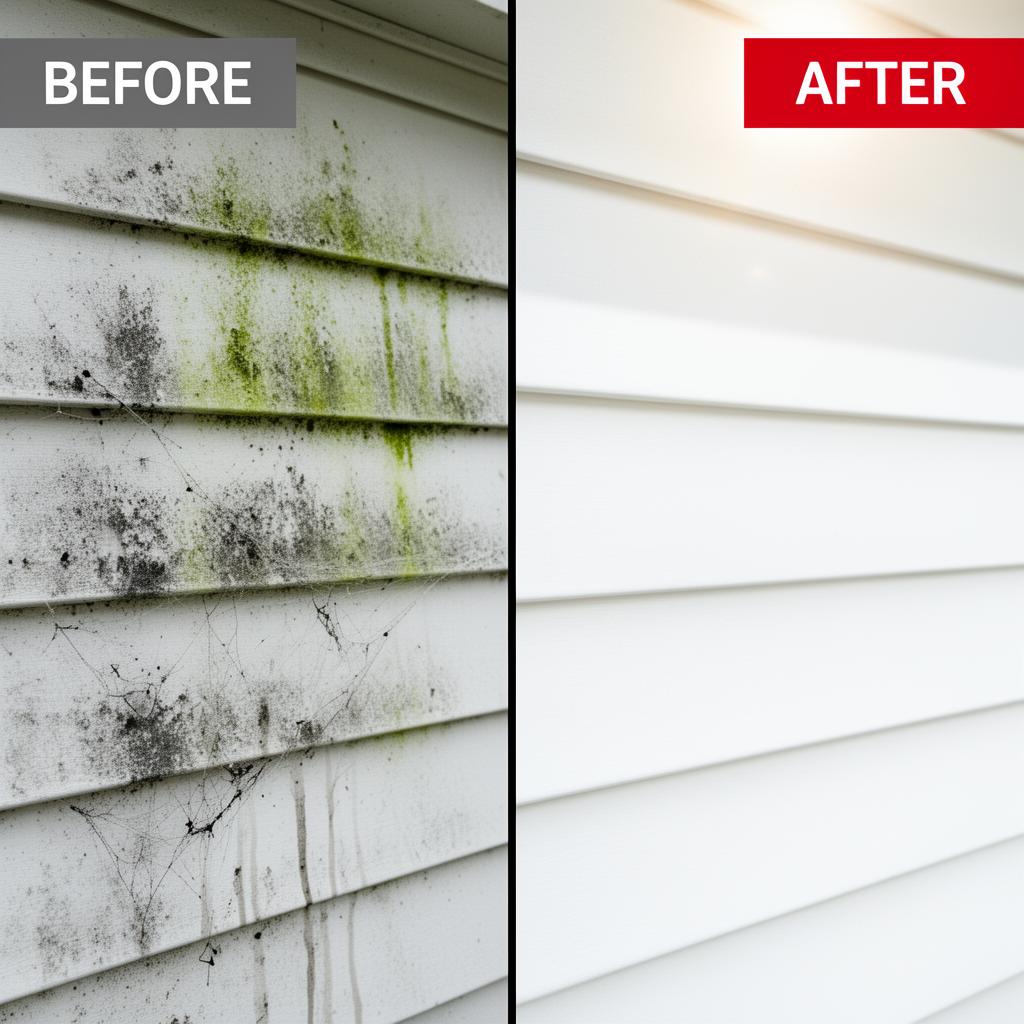
- Green staining (algae): The most common type. Green algae is surface-level biological growth that responds completely to professional soft washing. Results are dramatic — the staining disappears entirely in most cases.
- Dark gray or black streaking (mildew/Gloeocapsa): Also surface-level biological growth, also fully responsive to soft washing with appropriate chemistry. This is the "house is getting old and dirty" look that most people associate with needing a cleaning.
- White or chalky oxidation: This is different from biological staining — it's UV degradation of the vinyl pigment itself. Soft washing cleans the biological growth off oxidized siding and restores clarity, but can't reverse deep UV damage to the vinyl itself. On older siding (20+ years), some fading is permanent. We'll set honest expectations on your specific situation during the estimate.
- Yellow or orange staining near the roofline: Often iron oxide from roof run-off or certain types of algae. May require specific treatment beyond standard soft wash chemistry. Mention this when you call.
The manufacturer-recommended method
The Vinyl Siding Institute (the industry trade organization for vinyl manufacturers) specifically recommends low-pressure washing with cleaning solution over high-pressure washing. Their guidance reflects the two major risks of high-pressure application on vinyl: warping the panels from sustained direct force, and forcing water behind the siding through the overlap seams — which can lead to moisture damage in the wall cavity that doesn't become visible until weeks or months later.
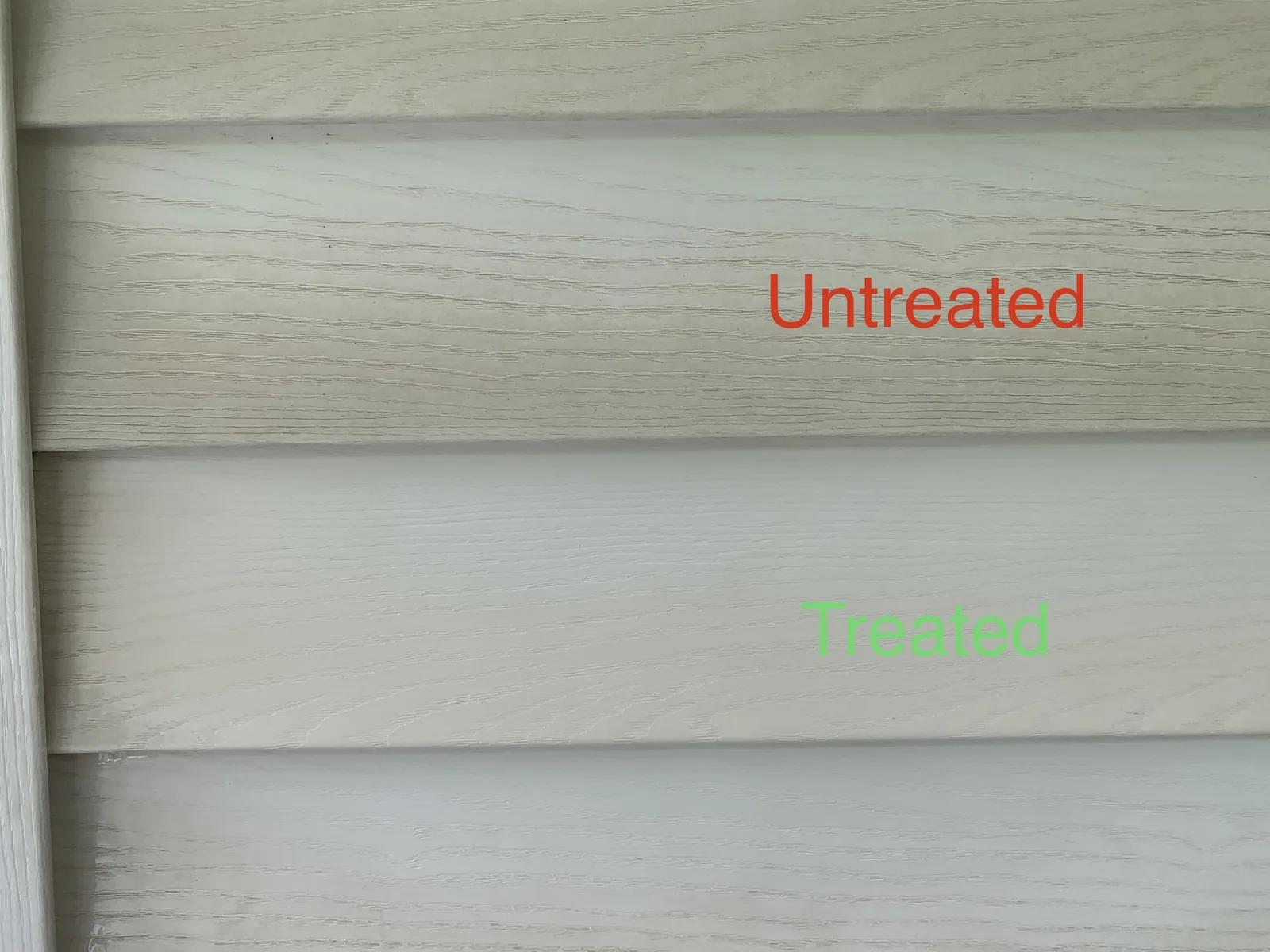
Our soft-wash house washing process follows the VSI guidance: low pressure (under 500 PSI), appropriate cleaning chemistry, sufficient dwell time for the chemistry to kill biological growth at the root, and a thorough low-pressure rinse from top to bottom. The result is clean siding that stays clean longer — because the organisms are dead, not just temporarily displaced.
Gutters: the overlooked part of a vinyl exterior
Vinyl gutters and aluminum gutters develop "tiger stripe" staining — dark vertical streaks on the gutter face caused by oxidation and contaminated runoff from the roof. This staining is often as visible as siding discoloration from the street, and it's a common reason homes look older than they are.
We include gutter exterior cleaning as part of our standard house soft-wash service. The chemistry and technique are slightly different from siding (gutters often need a more targeted application with a surfactant specifically designed for gutter oxidation staining), but the result is gutters that look new rather than weathered. We treat all gutters as part of a full exterior cleaning — not an add-on.
Cleaning around vinyl windows, trim and doors
A complete exterior soft wash includes the window surrounds, vinyl trim and door frames — not just the siding panels. These areas tend to accumulate the same biological growth as siding but are often missed by operators who are focused only on the large wall surfaces.
Around window frames specifically, we're careful not to apply concentrated solution into the seal between the window frame and wall (which can degrade caulk prematurely) and we rinse thoroughly to remove any solution from rubber gaskets and weatherstripping. This attention to the trim details is part of what makes a professional cleaning noticeably different from a hasty rinse job.
How long will the results last?
A properly soft-washed vinyl home in Louisville typically stays visibly clean for 12–18 months. The variation in that range comes down to sun exposure, tree canopy and proximity to water. Homes in Anchorage or Prospect with open lots and full sun exposure on most faces often go 18+ months before needing another cleaning. Homes with heavy shade in Old Louisville or Crescent Hill may show regrowth at 12 months. After you've had one or two cleanings, you'll develop a sense of your home's specific cycle.
Call or text (502) 777-8024 for a free estimate on your Louisville vinyl home. We serve Jefferson County and the full Kentuckiana region, with typical scheduling within the same week.
— The Louisville Housewash Crew
Cleaning around vinyl features: windows, J-channel and vents
A complete vinyl siding soft wash involves more than the main siding panels. The transition areas — J-channel at window and door openings, the top edge of the foundation sill, the transition from siding to soffit — accumulate biological growth and dirt that's visible up close even when the main panels look clean. We address these areas with targeted application and careful rinsing, making sure no solution is forced into the channel gaps where it could contact weather barriers or framing materials.
Utility penetrations — where electrical conduits, hose bibs, dryer vents and cable entries pass through the siding — are cleaned around but not into. These penetrations are already potential moisture entry points; we're not adding to that risk. If we notice penetrations that look like they're poorly sealed or showing water damage, we'll mention it.
New vs. old vinyl: different situations
Vinyl siding installed in the last 5 years is in a different situation than siding that's 15–20 years old. New siding cleans easily — biological growth hasn't had time to embed deeply, and the pigment hasn't experienced significant UV degradation. Cleaning new vinyl is a light maintenance task that keeps the home looking freshly installed. The results are dramatic but the work is quick.
Older vinyl tells a different story. After 15–20+ years of UV exposure and biological growth cycles, vinyl siding develops a porous, chalky surface that holds contamination more stubbornly. It also develops chalking — the white powdery residue from UV-degraded pigment — that sometimes makes the siding look dirty even after it's been thoroughly cleaned. We'll be transparent about what's old-siding chalking versus biological growth that can be fully removed. A clean old siding that's chalking is better than a dirty one, but it's not the same result as cleaning newer material.
Why regular maintenance beats reactive cleaning for vinyl
Vinyl siding that's cleaned annually never reaches a state where biological growth is deeply embedded. The annual treatment kills whatever has established itself over the past 12 months before it has time to root more deeply into the surface. The cleaning is faster, cheaper, and more complete than cleaning a home that's been neglected for 4–5 years.
The contrast is visible in results: a home cleaned annually stays bright and consistent. A home cleaned for the first time in 5 years can be dramatically improved but may have areas of staining that have chemically altered the surface — orange tannin stains from prolonged leaf contact, gray areas where mildew has been embedded long enough to leave residual coloring, or chalking accelerated by years of untreated biological acids. Prevention is always better than treatment.
Call or text (502) 777-8024 or use the quote form on our website to schedule your Louisville soft wash estimate. We'll give you an honest assessment of your home's specific situation and what you can realistically expect from professional cleaning.
Soft washing vs. power washing: which is actually right for your siding?
The Vinyl Siding Institute explicitly recommends against high-pressure washing for vinyl siding. Their published guidelines specify low-pressure water combined with cleaning solutions as the appropriate method — exactly what soft washing describes. The reasons are practical: high pressure can crack and warp vinyl panels, force water behind the siding into wall cavities, and strip away any factory-applied protective coatings.
Despite this clear manufacturer guidance, plenty of Louisville "pressure washing" companies use high-pressure equipment on vinyl because it's faster and simpler than a proper soft-wash system. The results look similar immediately after cleaning — water at any pressure will temporarily remove surface dirt. But the long-term outcomes are different. A properly soft-washed vinyl surface has been treated with chemistry that killed biological growth at the root, producing results that last 12–18 months. A high-pressure rinse displaces organisms temporarily and often leaves them alive in the siding's pores, where they re-establish quickly. When getting quotes for vinyl siding cleaning, ask specifically whether the company uses soft-wash equipment and chemistry. The answer tells you a lot.
Louisville pressure washing for vinyl siding homes covers Louisville, St. Matthews, Prospect, Jeffersontown, Middletown, Anchorage and the full Kentuckiana region. Call or text (502) 777-8024 for your free, no-obligation estimate.