"How often should I have my house washed?" is the single most common question we get. The honest answer: it depends on what's around your home — but most properties in Kentuckiana benefit from at least one professional cleaning every year.
The short answer for Louisville homeowners
Most homes in Louisville and the surrounding Kentuckiana region should be professionally soft-washed every 12–18 months. That's the sweet spot that keeps biological growth from getting established while not being unnecessarily frequent. But several factors push you toward annual (or more) cleaning — and a few might let you stretch to two years.
House siding: every 12–18 months
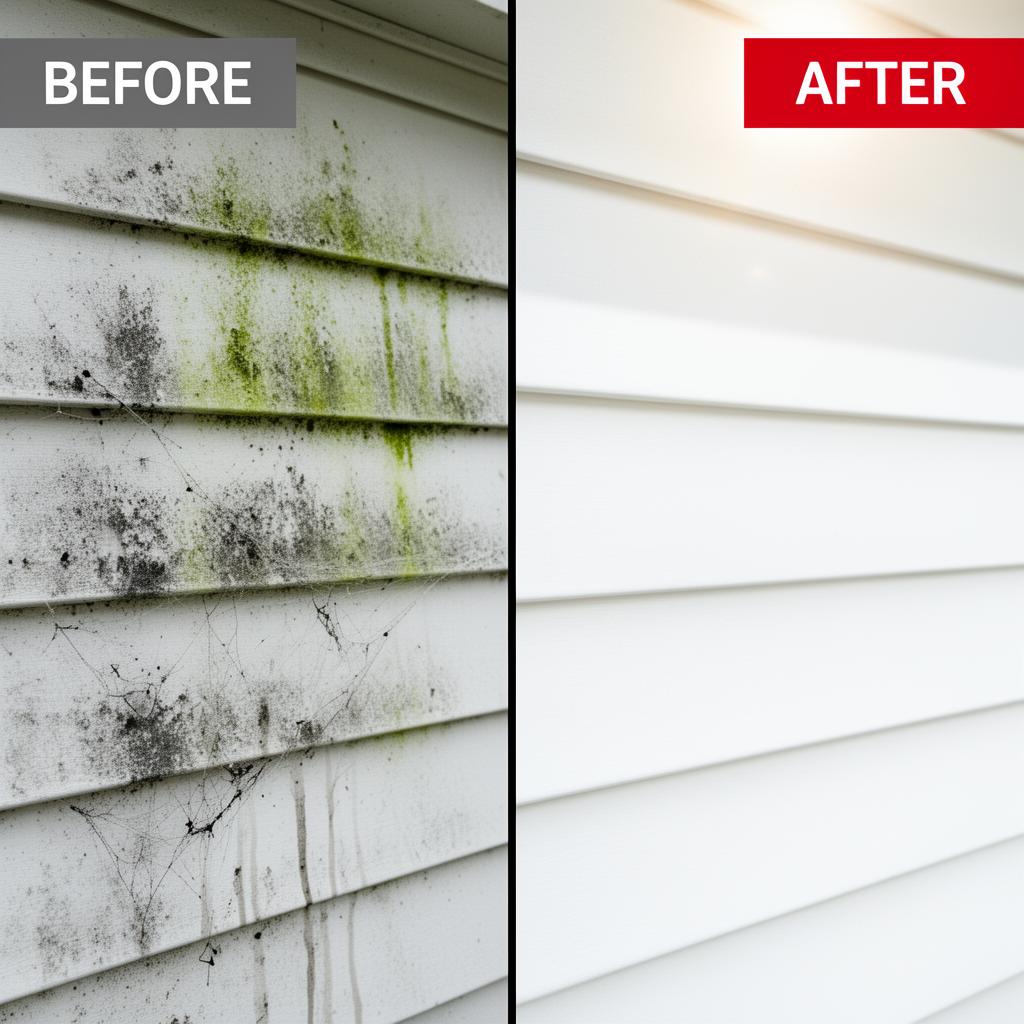
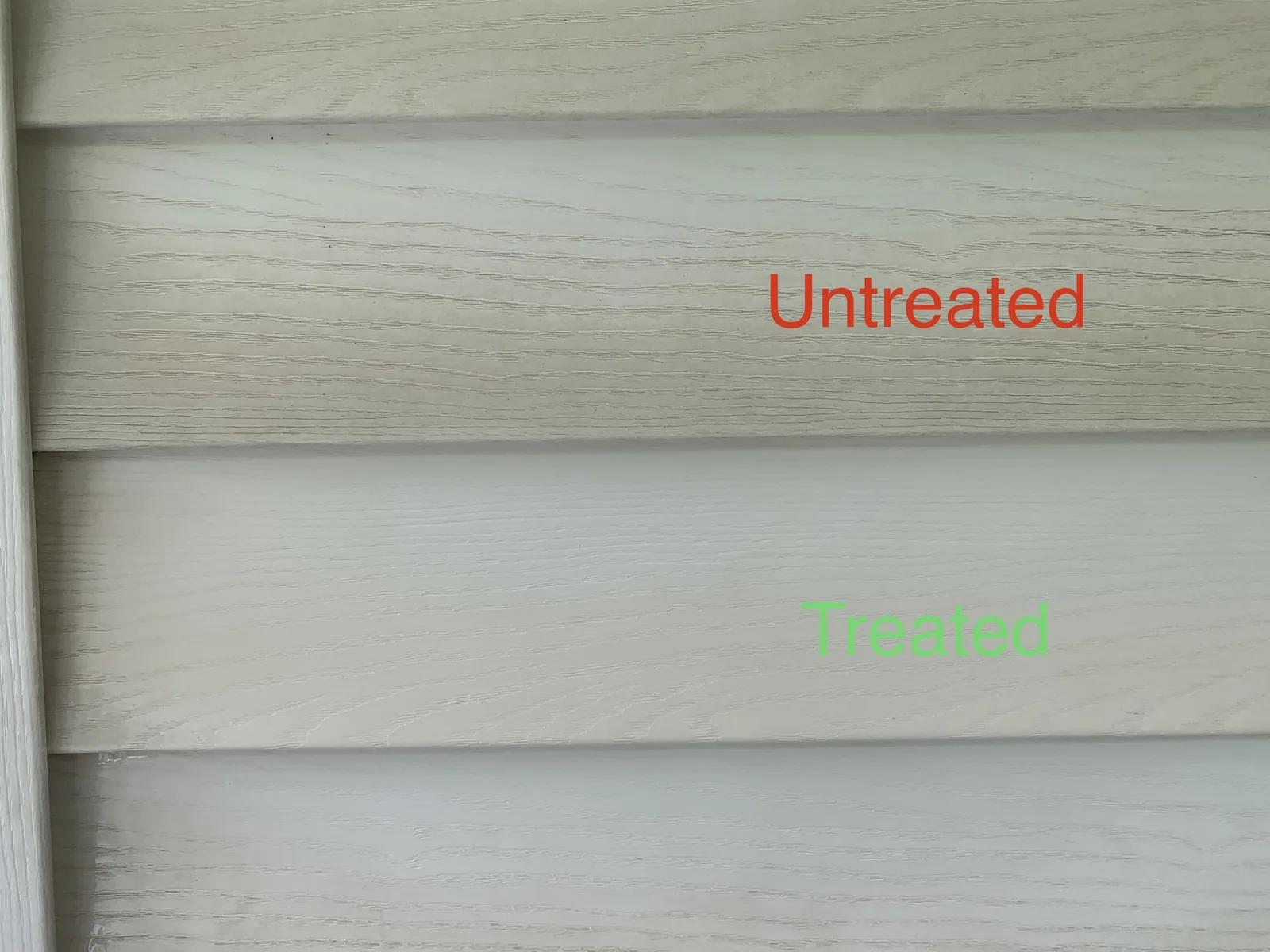
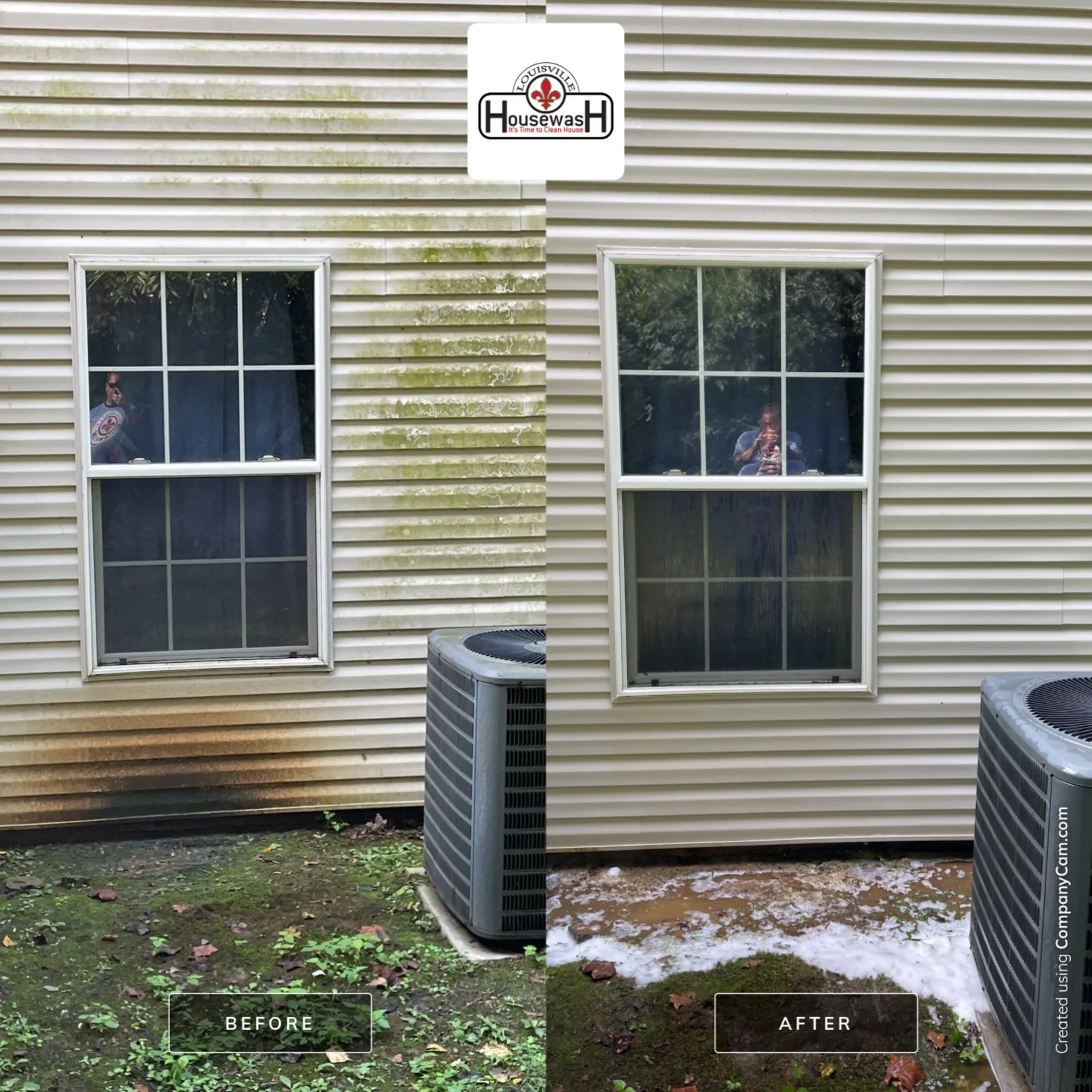
Vinyl, brick, stucco and wood siding accumulates mold, mildew, algae and airborne grime continuously. In Louisville's climate — humid summers, significant rainfall, and heavy pollen seasons — that accumulation becomes visible within a year on most homes. Once a year is the sweet spot for most houses.
Factors that push you toward annual or more frequent cleaning:
- Heavy tree cover or a predominantly shaded exterior, especially north and east-facing walls
- Proximity to the Ohio River or large bodies of water (increased humidity and biological growth)
- Older homes in the Highlands, Old Louisville or Crescent Hill with brick or painted wood that holds moisture
- A history of fast mildew regrowth — if you cleaned last spring and can already see green, switch to annual
Factors that may let you stretch to 18–24 months:
- Full sun exposure on most exterior surfaces throughout the day
- Open suburban lots with minimal tree coverage
- Newer vinyl siding with antimicrobial coatings (these slow — but don't stop — biological growth)
- A recent soft wash where the organisms were fully killed (not just rinsed)
Concrete driveways and sidewalks: every 12–18 months
Plan on every 12–18 months for most Louisville driveways. Tire marks, oil drips, mildew along the shaded edges, and organic stains from leaves and mulch build up quickly — especially on driveways with significant tree canopy overhead.
Heavy-use driveways — multiple vehicles, sports courts, garages used as workshops — tend to accumulate grease and oil faster and benefit from annual cleaning. Lightly used driveways in open sun can often stretch to 18 months or even 2 years without the surface looking neglected.
Decks and fences: every 1–2 years
Wood needs a gentle clean every 1–2 years to remove the gray oxidation layer, biological growth and any dirt buildup, and to prepare the surface for sealing or staining. Skipping this leads to accelerated splintering and early replacement.
The visual indicator for decks is simple: if the boards look gray rather than the original wood tone, they need cleaning. That gray is the UV-damaged surface layer plus biological growth. A deck soft wash with a wood brightener restores the natural color and opens the grain for a sealer or stain to penetrate properly.
Composite decks are marketed as maintenance-free, but they still develop mold and mildew staining — especially between boards and in shaded areas. Most composite manufacturers recommend annual cleaning with approved solutions.
Gutters: annually, typically in spring
Gutter exteriors develop black "tiger stripe" staining from oxidation and contaminated runoff — a different issue from interior cleaning. The exterior staining is best removed with a soft-wash treatment at the same time you're having the house washed. We include gutter exterior cleaning as part of a standard house soft wash.
The visual test: when to call regardless of schedule
Beyond the calendar, use this simple visual check: walk to the curb and look at your home. If you can see any of the following, it's time to schedule regardless of when you last cleaned:
- Green or dark streaking on siding, soffits or brick
- Black streaks on the roof (Gloeocapsa magma algae — a separate service)
- Visible mildew or moss patches anywhere
- Gray oxidation on deck boards or fence rails
- Driveway edges or shaded areas with dark staining
What happens if you wait too long?
The cost of waiting too long is both visual and structural. Algae and mildew that's allowed to root deeply into vinyl or wood is harder and more time-consuming to remove than fresh growth — which translates to higher cleaning costs. On brick homes, biological growth accelerates mortar erosion. On wood decks and siding, embedded mold and persistent moisture cause soft spots and rot that a cleaning can't fix.
The most cost-effective approach is staying ahead of the growth with regular cleaning rather than letting it build to the point where it becomes a structural issue.
Call or text (502) 777-8024 to schedule your Louisville pressure washing for your home's next cleaning, or use the quote form on our site. We'll come out, walk the property, and give you an honest assessment of what it needs.
The cost of skipping regular cleaning
The case for regular exterior cleaning isn't just aesthetic — it's a maintenance argument. Mold and mildew aren't inert stains. They're living organisms that produce acids that break down paint coatings, deteriorate mortar, and degrade caulk around windows and doors. The biological growth you can see on the surface of a home is the visible portion of a much larger colony that has embedded itself into the pores of siding, brick and stucco.
On vinyl siding, years of embedded biological growth causes discoloration that doesn't fully reverse — even with cleaning. The pigment in the vinyl oxidizes and bleaches in combination with the chemical byproducts of mold and algae, leaving a permanently faded appearance. Regular cleaning before this point is the only prevention.
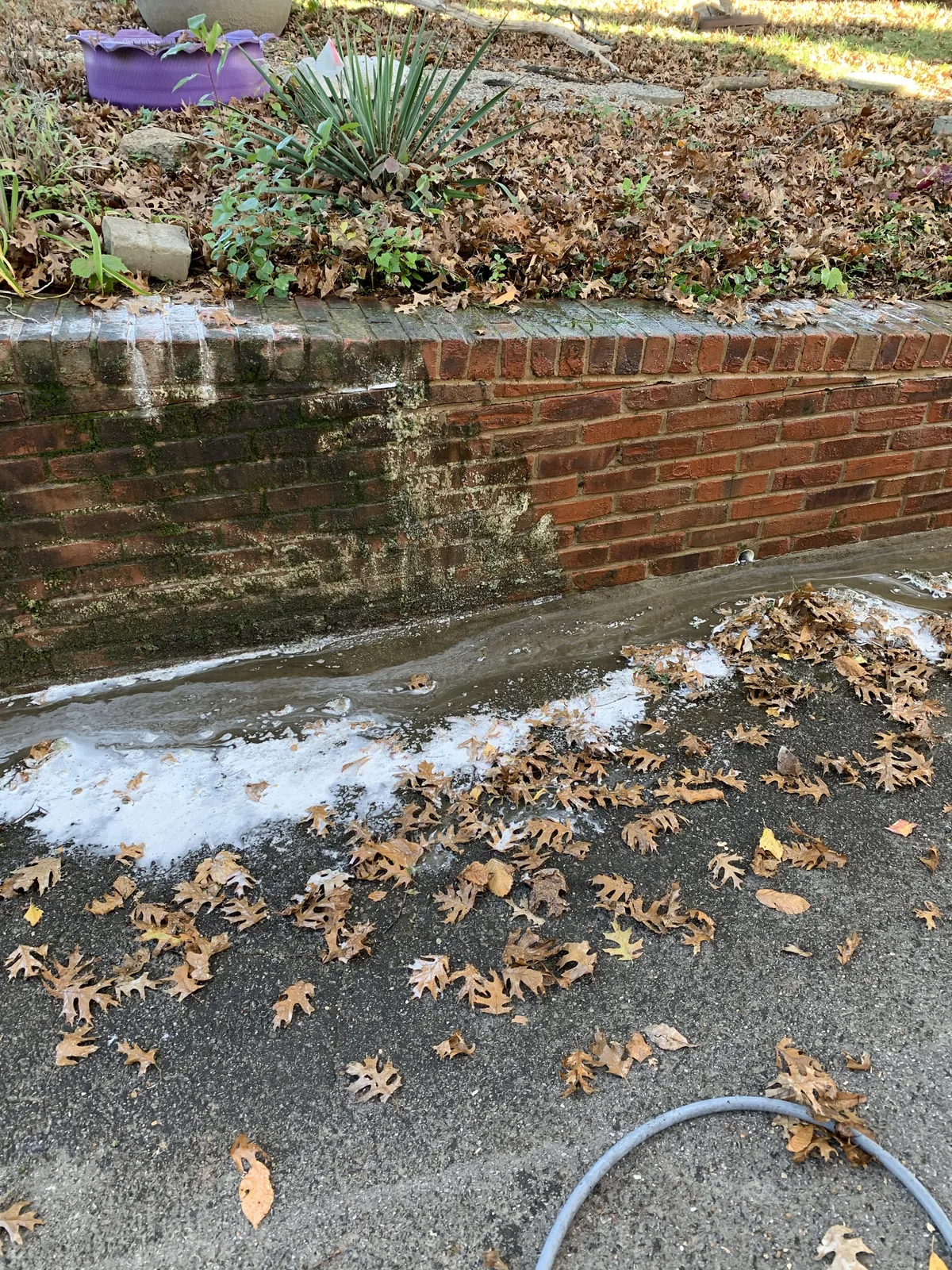
On brick homes, the most serious consequence of irregular cleaning is mortar deterioration. The acidic byproducts of biological growth slowly dissolve the mortar between bricks, especially on softer lime-based mortar found in pre-1970 Louisville homes. Tuckpointing a brick home — re-mortaring the joints — runs several thousand dollars. Regular cleaning extends the mortar's life significantly.
Wood decks without regular cleaning develop embedded mildew and gray oxidation that penetrate the wood fibers over time. Eventually, this biological damage weakens the wood structurally, causing soft spots and splintering that require board replacement rather than just cleaning and refinishing.
How to tell when it's been too long
Beyond the calendar schedule, use these visual indicators as your override signal — regardless of when you last cleaned:
- North and east faces of the home show green or black streaking: These sides get the least direct sun and the most moisture retention. They're the first to show biological growth and the best early indicator that cleaning is overdue.
- Soffits and fascia boards show streaking or spotting: These horizontal surfaces collect moisture and organic debris from the roof and gutters. Visible staining here means the growth is well-established.
- Deck boards have turned gray: The natural wood color should be warm and brown. Gray boards mean the UV-damaged surface layer has accumulated with biological growth. This is overdue for cleaning.
- Driveway edges are darkening: The edges of a driveway where it meets mulch beds, grass or shaded areas are the first to develop mildew. Visible darkening along the margins means the rest of the driveway will follow.
- You can smell mildew near the foundation: If you notice a musty smell when you're close to the foundation or in shaded areas of the yard, biological growth is significant enough to create noticeable odor.
Coordinating cleaning with other maintenance
Exterior cleaning integrates naturally with other home maintenance tasks, and timing them together makes both more effective:
- Before painting or staining: Always clean before applying any coating. Paint and stain bond to the surface they're applied to. Contaminated surfaces produce early failure. This applies to decks, fences, siding and trim.
- Before caulking window and door frames: Clean the frames, let them dry completely, then apply fresh caulk. Caulking over dirty or moldy surfaces produces early failure and a poor-looking result.
- Before photography for real estate listings: A clean exterior makes a dramatic difference in listing photos. Schedule the cleaning 2–3 days before the photo shoot — long enough for everything to dry but close enough to still be spotless.
- After construction or renovation work: Concrete splatters, paint overspray, construction dust and debris end up on siding and hardscape during any home project. A post-construction cleaning returns everything to baseline before you do the final walkthrough.
Commercial properties and HOA maintenance schedules
For commercial properties, storefronts, HOA common areas and investment properties, cleaning frequency should be driven by a documented maintenance schedule rather than visual checks. Most commercial clients and property management companies we work with in Louisville are on annual or semi-annual service schedules — spring and fall cleanings that keep properties in consistent condition year-round.
If you manage multiple properties or need recurring service, we can set up a standing schedule with automatic seasonal reminders. Call (502) 777-8024 to discuss a maintenance program that fits your portfolio.
Building a simple maintenance calendar
The easiest way to stay on schedule is to tie exterior cleaning to something you already do regularly. Many Louisville homeowners connect their soft wash to spring HVAC service — both happen when the season turns warm and both take a few hours to complete. Others schedule it alongside their annual gutter cleanout in fall. Whatever the anchor event, linking exterior cleaning to an existing routine is the difference between actually doing it and perpetually meaning to get around to it.
If you'd like help building a recurring service schedule for your property — whether that's annual, semi-annual, or seasonal — call us at (502) 777-8024. We'll set up a standing schedule with seasonal reminders so you don't have to think about it.