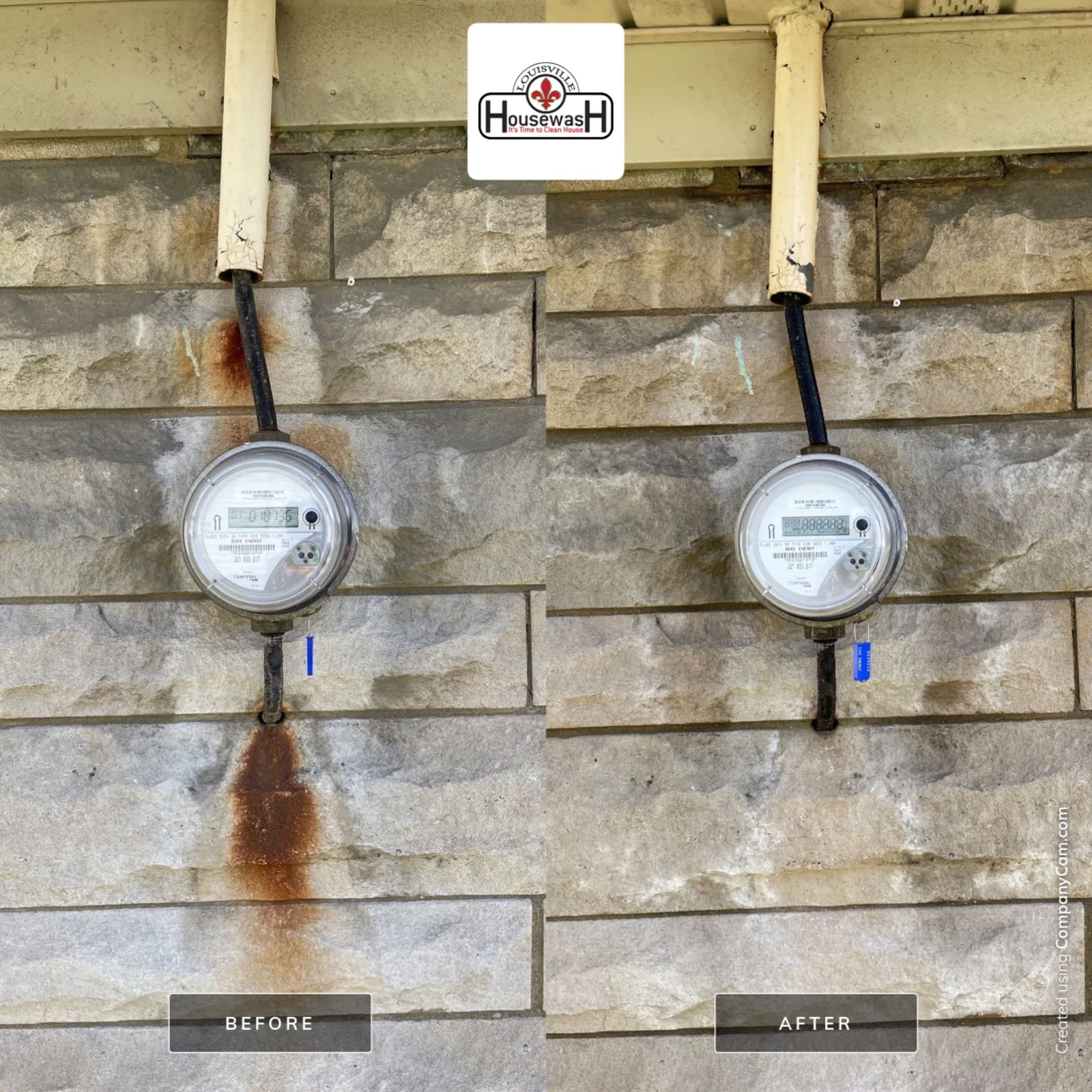
We're not anti-DIY — but rental pressure washers can do real damage in inexperienced hands. Here are the five mistakes we see most often, and why some of them end up costing more to fix than a professional cleaning would have.
Why DIY pressure washing is higher-risk than it looks
Pressure washing looks straightforward. Point water at dirty surface, surface gets clean. But rental units from hardware stores typically deliver 2,000–3,500 PSI — the same pressure level that professional contractors use for industrial concrete cleaning. That amount of force, aimed at the wrong surface or from the wrong angle, causes damage that often doesn't show up for weeks or months.
Here are the five mistakes that account for the vast majority of repair calls we see every year.
1. Spraying siding at full pressure
This is the most common and most damaging mistake. Vinyl, wood and stucco are not designed to take a concentrated 3,000 PSI stream aimed directly at the surface. The visible damage — cracked vinyl, gouged wood grain, chipped stucco — is the minor version of this problem.
The more serious version is invisible: high pressure forces water behind the siding and into the wall cavity. That moisture soaks into the housewrap, insulation and framing, where it doesn't dry easily. Weeks later, you might notice a musty smell or softness in the drywall. Months later, you're dealing with mold remediation or structural rot — and there's no easy way to connect it back to the pressure washing job.
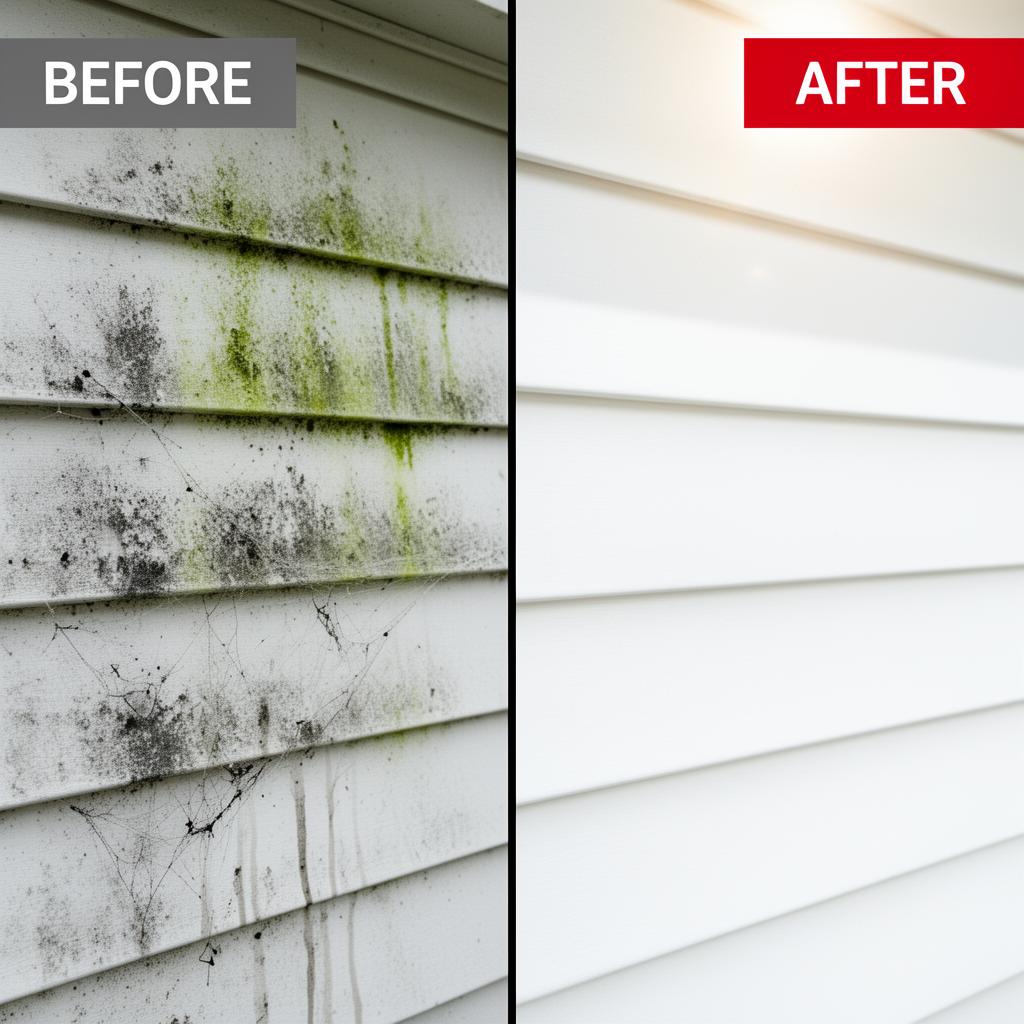
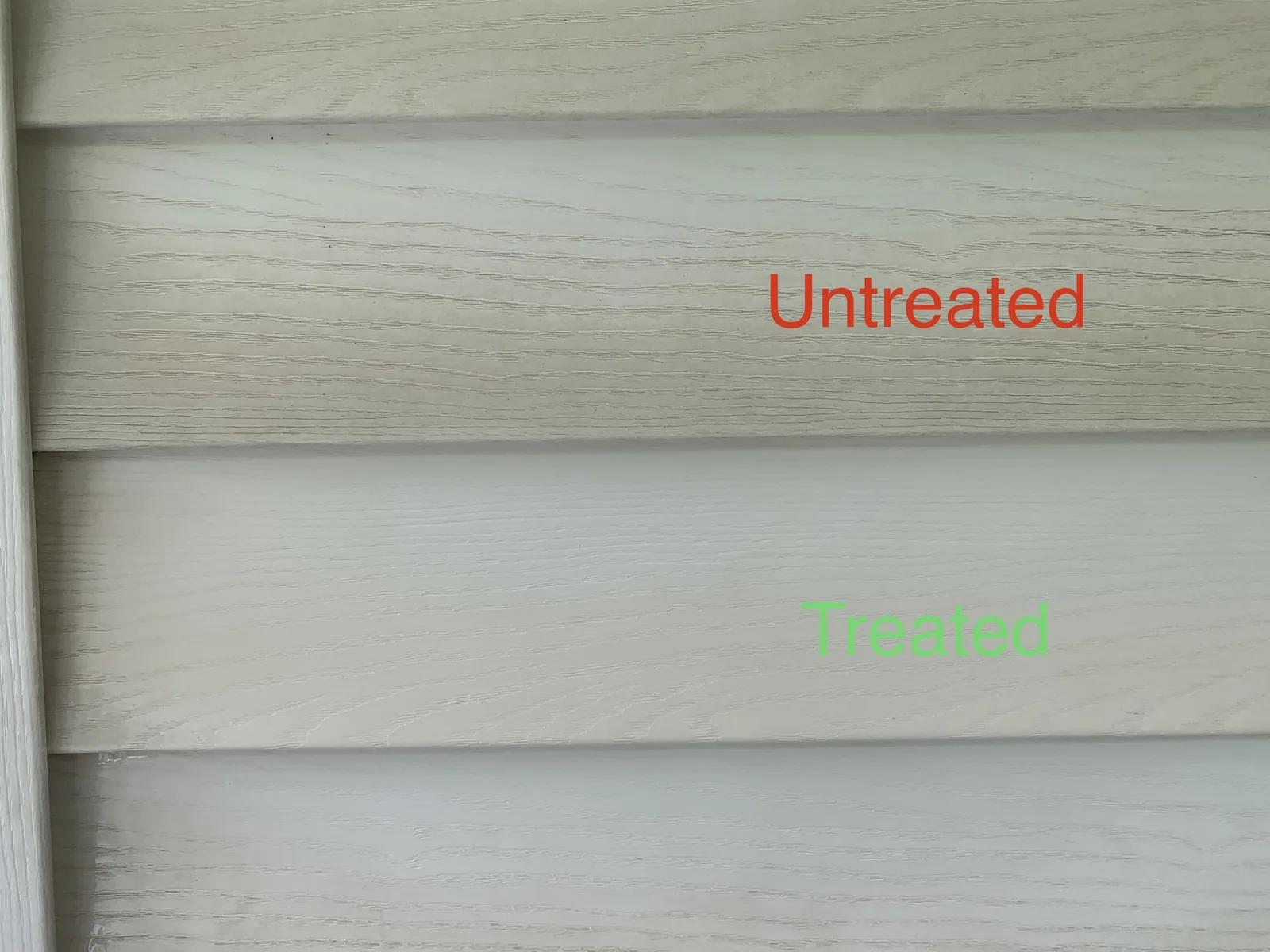
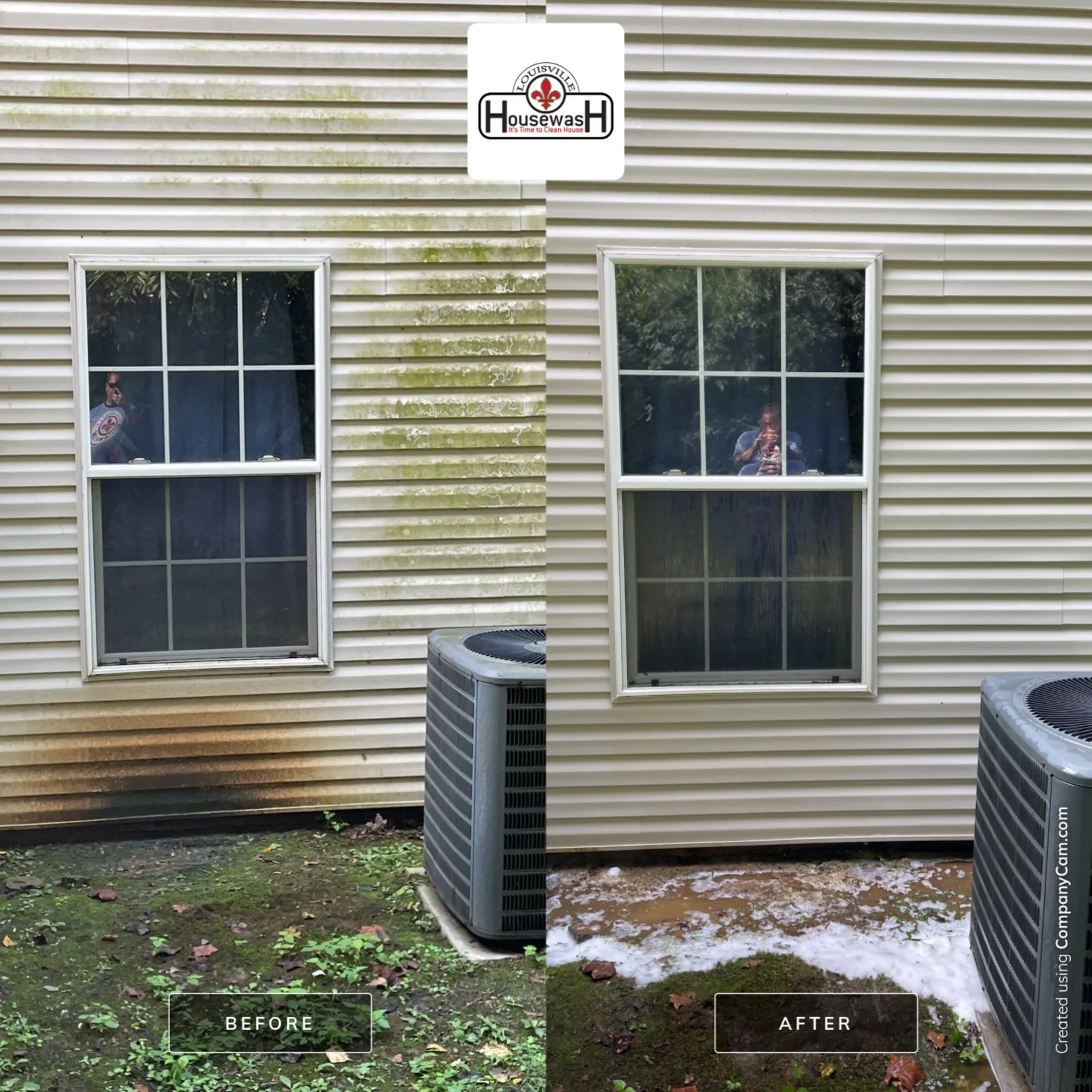
The correct method for siding is professional soft washing: low pressure (under 500 PSI) with professional cleaning solution. The detergent does the work; the pressure just rinses.
2. Aiming up under siding overlaps
Vinyl and wood siding are designed to shed water from the top down — each row overlaps the row below it. If you angle the pressure wand upward to get under the overlaps (which some people do trying to get a "deeper" clean), you're forcing water directly into the wall behind the siding. This is one of the fastest ways to create a moisture problem in an otherwise healthy wall.
Always spray siding from above or straight on, never from below at an upward angle. Professional soft wash equipment is designed to apply solution at low pressure from a safe angle.
3. Pressure washing your roof
This is the fastest way to void your shingle warranty and shorten your roof's life by years. Asphalt shingles are protected by granules embedded in the surface — those granules provide UV protection, fire resistance and waterproofing. High-pressure water strips those granules off the shingle, exposing the asphalt layer to direct UV degradation.
Beyond the shingles themselves, pressure drives water under the overlapping layers and through existing nail penetrations into the roof deck. Roof leaks following DIY pressure washing happen every season. The correct method for roof algae and moss is soft washing with a biocide solution — low pressure, chemistry does the work.
4. Skipping cleaning solution
Pressure washing without proper cleaning solution rinses dirt and moves surface contamination around — it doesn't kill mold, mildew or algae. Those organisms are living in microscopic pores in siding, concrete and wood. Without a chemical treatment that kills them at the source, you're getting a temporary visual improvement. The biological growth comes back faster and heavier the next time because you've just cleared away the dead surface material that was naturally slowing new growth.
Professional cleaning solutions — sodium hypochlorite mixtures, surfactants, and specialized formulations for different surfaces — kill the organisms at the root. A properly soft-washed surface stays clean 3–5x longer than one that was pressure-rinsed without chemistry.
5. Working on a ladder with a pressure wand
This one has serious safety implications. A pressure washer wand at full pressure has meaningful recoil — the reactive force from the water stream pushes back against the operator. At ground level, that's manageable. On a ladder, a sudden recoil from the wand can knock a person off their footing.
Every spring and summer, emergency rooms across the country treat ladder falls from DIY pressure washing. Professional cleaning companies use extension wands, telescoping equipment and low-pressure soft-wash systems specifically designed for second-story work without ladder use.
What DIY actually works for
To be clear: not all DIY pressure washing is a mistake. Here's where rental equipment is genuinely effective and low-risk:
- Concrete driveways and sidewalks at ground level
- Patio furniture and outdoor equipment
- Fence boards at safe working angles (not composite — too easy to damage)
- Low-lying concrete steps and stoops
For anything involving the home's exterior surfaces — siding, brick, stucco, soffits, decks — the risk-to-reward calculation strongly favors a professional who knows exactly what pressure, nozzle angle and chemistry each surface requires.
Getting a professional quote in Louisville
If you're weighing DIY against professional cleaning, call us for a free estimate. We'll tell you honestly what your home needs and what it costs. Most Louisville homeowners are surprised how affordable professional soft washing is compared to the potential cost of fixing damage from a DIY gone wrong.
Call or text (502) 777-8024 or use the quote form on our site.
The rental equipment problem
Hardware store rental pressure washers are typically 2,500–3,500 PSI gas units designed for heavy-duty concrete and industrial use. They're marketed broadly as "pressure washers for any outdoor cleaning job," which is technically true — but the operator skill and knowledge required to use them safely on different surfaces is not mentioned in the rental agreement.
These machines have variable nozzle tips that change the PSI and spray pattern, but even on the widest, lowest-pressure tip, rental units produce significantly more force than is appropriate for siding, wood and painted surfaces. Professional soft-wash systems use dedicated low-pressure pumps that operate in a fundamentally different range — not just a rental unit with a gentler nozzle attached.
This isn't a reason to never rent a pressure washer — it's a reason to understand what you're working with and what surfaces to avoid.
6. Skipping protective prep for landscaping
This mistake is specific to anyone using cleaning solution: applying detergent without pre-wetting surrounding plants. Store-bought exterior cleaning concentrates, as well as the professional formulations used by washing companies, are toxic to plants at concentrated doses. The pre-rinse step — saturating all landscaping, beds and grass in the work zone before applying solution — creates a dilution buffer that protects plants. Skipping it, or underestimating how far overspray travels, is how homeowners end up with burned or dead shrubs after a cleaning project.
After cleaning, a thorough post-rinse of all landscaping removes any remaining chemical contact. This step is as important as the pre-rinse. Professional crews do both as standard procedure; DIY operators often skip one or both because they're focused on the task at hand.
7. Ignoring personal protective equipment
A full-pressure stream from a rental pressure washer will cut through skin. This isn't an exaggeration — it's a documented medical emergency that happens every year to homeowners who aren't taking the risk seriously. At minimum, wear:
- Safety glasses or goggles (water and debris spray upward unpredictably)
- Closed-toe shoes (not sandals — ever)
- Long pants and sleeves for any close work
- Chemical-resistant gloves if handling cleaning concentrates
If you're using cleaning solution, also ventilate well and avoid touching your face until you've washed your hands thoroughly. Sodium hypochlorite concentrates are irritants to skin and eyes.
8. Spraying electrical fixtures and outlets
Outdoor electrical outlets, light fixtures and junction boxes look like fair game when you're cleaning the exterior of a home. They are not. Forcing water into outdoor electrical components can create shorts, trip breakers, damage fixtures, and in extreme cases create shock hazards. Use a hand cloth to clean around outdoor electrical fixtures, never direct water pressure at them.
Window air conditioner units, dryer vents, outdoor speaker housings and similar components all get the same treatment — clean around them by hand, not with a pressure stream.
The honest cost comparison
Here's the math that most homeowners don't do until after they've tried DIY first: a rental pressure washer from Home Depot runs $75–$100/day plus fuel. Add cleaning solution ($30–$50), safety gear if you don't have it ($30–$50), and 4–8 hours of your Saturday. Total cost: $135–$200 and half a day — plus the risk of damage that can cost hundreds or thousands to repair.
Against that, a professional soft wash gets you better results, no risk of surface damage, and your Saturday back. And the DIY column carries a line the rental counter never quotes you: a cracked window seal, water forced in behind the siding, or paint stripped off a soffit can run into repair bills that dwarf the entire exercise. Call or text (502) 777-8024 and we'll quote your house after walking it.
If you do want to DIY, do the concrete and hardscape yourself — that's exactly where rental pressure equipment works well. Leave the siding, brick, wood, and anything above ground level to a professional. That compromise gives you cost savings on the parts that are genuinely low-risk, and professional results on the parts that aren't.
Getting it done right in Louisville
Louisville pressure washing from Louisville Housewash serves homeowners across Jefferson County and the Kentuckiana region. We'll give you an honest estimate, show up on time, and use the right method for every surface on your property. Call or text (502) 777-8024 for a free, no-pressure quote.